Where community thrives, home begins.
Image Source: Indian retailer
For years, the Indian Housing has been a numbers game. Families chased square footage the way children chase kites, believing that the bigger it was, the higher it flew. A sprawling apartment in a prime neighbourhood wasn’t just a home; it was proof that you had arrived.
But walk into a sales office today, and the conversation sounds different.
A young couple isn’t asking about carpet area first; they’re asking where their toddler will go to school. A working professional wants to know if there’s a gym she can actually use before work. A retired couple wonders whether the community has a walking track or a clinic nearby. The questions have shifted from How big is the flat?How will we live here? This isn’t a small change. It’s a quiet revolution in how urban India imagines home.
The New Indian Housing Trends: Choosing Community Over Concrete
Buyers are no longer dazzled by glossy brochures showing cavernous living rooms, a pattern that developers are noticing everywhere. Instead, buyers are drawn to masterplans dotted with schools, clubs, wellness centres, and green pockets. The pandemic only sharpened this shift. When the situation forced families to live indoors, the cracks in isolated living became impossible to ignore. Parents spent hours ferrying children to distant schools. Professionals missed the simple luxury of a gym within walking distance. Neighbours barely knew each other. The four walls that once symbolised security suddenly felt like limits.
So today’s buyer asks a different question: Does this project give me a life, not just a house?
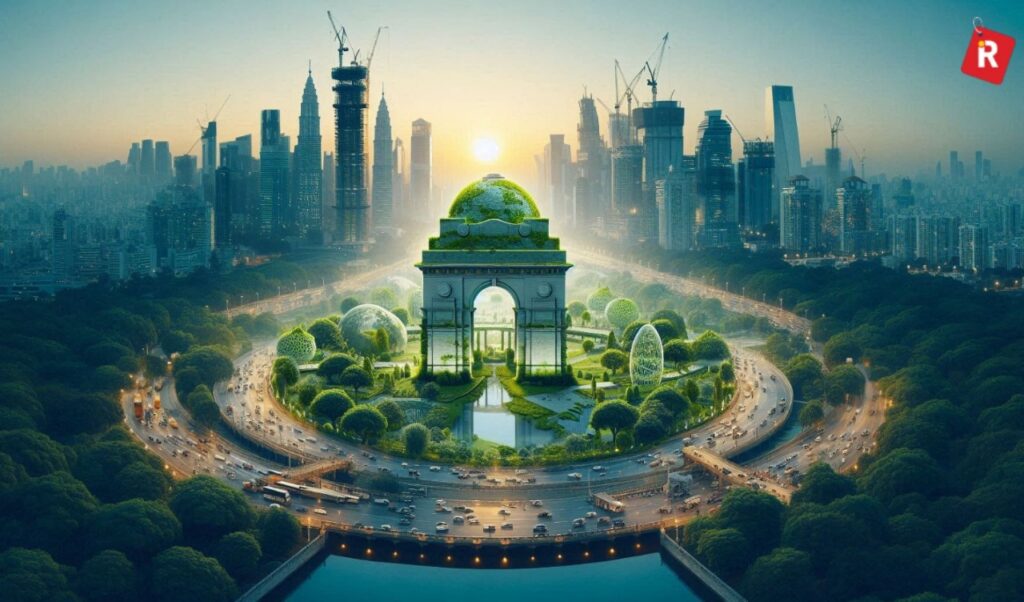
Developers have responded by reimagining housing projects as ecosystems, places where education, healthcare, wellness, and community life sit at the heart of the design. Square footage still matters, but it no longer defines aspiration.
Wellness: From Luxury Add-On to Daily Essential
If there’s one word that captures the new Indian lifestyle, it’s well-being. Gyms, yoga studios, meditation decks, walking tracks, these aren’t“amenities” anymore. They are expectations.
Urban families are more health-conscious than ever. They want spaces that help them stay active, grounded, and mentally balanced. A township with a wellness centre isn’t seen as indulgent; it’s seen as responsible, future-ready.
For professionals juggling long workdays, having a gym or yoga studio downstairs means consistency. For older residents, a clinic within the community offers reassurance. To children, open spaces and sports facilities mean childhoods spent outdoors, not on screens.
Wellness has become part of the architecture of everyday life.
Clubs and Cultural Spaces: The New Heart of Community Life
Image Source: Birla evara
Walk into a modern clubhouse today, and you don’t just find a pool table gathering dust in the corner. You find life unfolding. Children chase each other across open lawns while their parents linger over evening tea. A music night fills the hall with laughter and applause. In another room, a pottery workshop leaves hands stained with clay but hearts full of pride. These spaces are no longer just amenities; they are the pulse of a community.
What makes them powerful is their ability to turn strangers into neighbours. A book club sparks conversations between people who might otherwise pass each other silently in the elevator. A festive celebration brings families together, weaving traditions into shared memory. Sports tournaments create rivalries that end in friendships. In these spaces, bonds are formed not by proximity alone, but by participation, by the joy of shared experience.
In premium housing projects, these clubs and cultural centres are more than add-ons; they are the soul. Developers call them “sticky communities,” places where people don’t just move in, they stay, because the community itself becomes irreplaceable. Buyers are willing to pay for that feeling: the comfort of knowing their children will grow up surrounded by familiar faces, the reassurance that friendships and support systems are built into the very architecture of their lives.
The Future of Indian Housing: A Life Built Around People, Not Walls
The rise of social infrastructure marks a turning point in India’s housing story. Families are no longer chasing bigger homes; they’re chasing better lives. They want schools that shorten commutes, wellness centres that support healthier routines, and clubs that nurture community.
Developers who understand this shift are designing homes that feel less like isolated units and more like interconnected worlds.
The future of Indian housing won’t be measured in square feet. It is in the quality of life it enables, such as in the friendships formed, the routines supported, and the communities built.
In modern India, community matters more than concrete. And that may be the most meaningful evolution of all.