The long pending Free Trade Agreement (FTA) between India and the European Union (EU) has finally concluded its negotiations, with both sides joining hands to formalise the agreement by officially signing it. Legal scrubbing—a standard procedure of vetting to ensure legal accuracy, internal consistency, and the commitments of both parties—will take place before the agreement is formally signed and implemented.
Intermittent FTA Talks Between India & EU
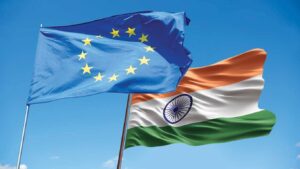
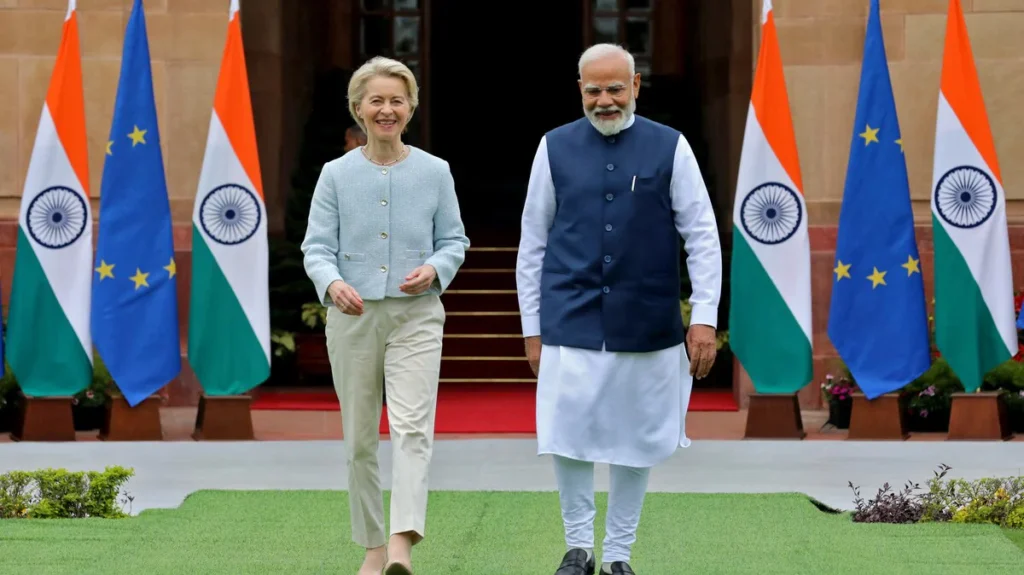
For nearly two decades, the EU and India have been engaged in negotiations, making this one of the longest-running and most complex trade discussions undertaken by either party. European Commission President Ursula von der Leyen and European Council President Antonio Costa were the chief guests at the 77th Republic Day celebrations. During their four-day visit, official talks were initiated to strengthen bilateral relations.
The India–EU Trade Agreement has been under negotiation for nearly 18 years. Prime Minister Narendra Modi stated that the agreement would strengthen cooperation between the two economies. He added that it would represent 25 per cent of global GDP and one-third of global trade, calling it “the mother of all deals.”
Amid rising economic disruptions caused by U.S. tariff policies, this trade deal is expected to boost trade between India and the EU.
India-EU Trade
Prime Minister Modi stated that India’s textiles and jewellery sectors would witness a boost in exports, which had been hit by U.S. tariffs in recent months. The EU would benefit from the agreement by gaining deeper access to India’s diverse markets. Furthermore, it would allow the EU to reduce dependence on partners that have, at times, proven unreliable.
Beyond redefining bilateral ties, the trade deal between India and the European Union marks a significant development in the evolving global economic order. It reflects a shared intent by both India and the EU to diversify partnerships and reduce over-dependence on limited markets.
Follow The World Times for more such news.