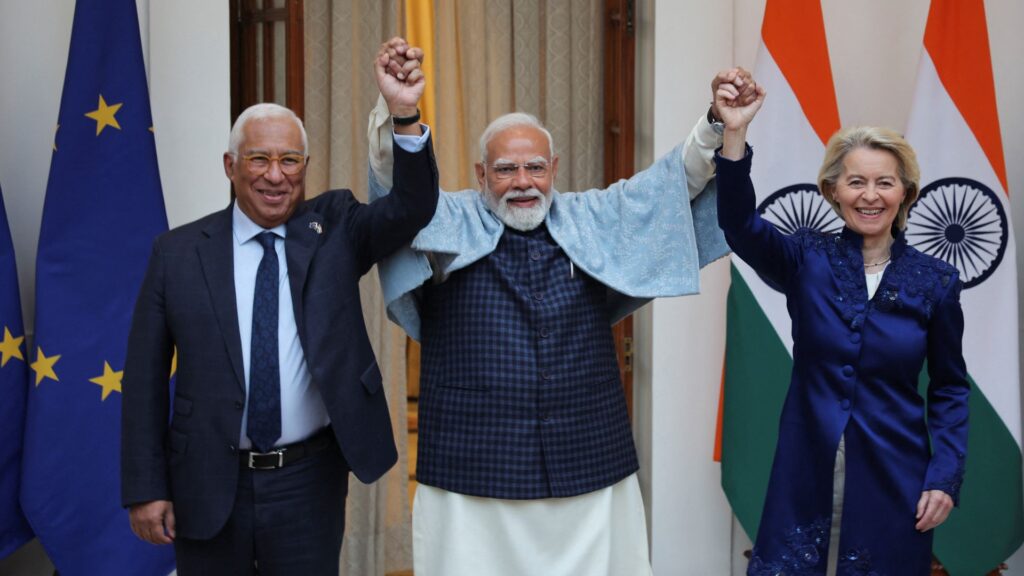
The India-EU Deal marks a major free trade agreement after nearly two decades of negotiations. The deal is being called one of the biggest trade agreements in recent years and is being seen as a setback for former US President Donald Trump’s trade strategy.
The agreement comes at a time when global trade is becoming more political and less cooperative.
Why Was the India-EU Deal Signed Now?
Talks between India and the EU started in 2007, but they remained stalled for many years. The sudden progress is linked to changes in the global trade environment.
Today, many countries are facing:
- Rising protectionism
- Heavy use of tariffs
- Trade being used as a political weapon
Under Donald Trump, the US imposed high tariffs even on friendly countries. Both India and Europe felt increasing pressure from American trade policies. This pushed them to look for reliable partners and reduce dependence on the US market.
As a result, India and the EU decided to speed up their trade negotiations.
What Are the Main Features of the Deal?
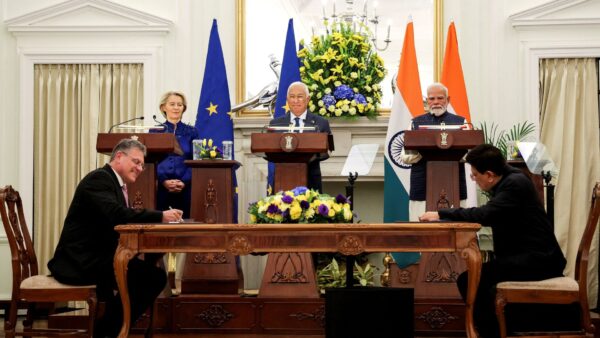
The deal mainly focuses on trade in goods and market access.
What India Gives the EU
India will reduce or remove tariffs on about 96% of EU imports in a phased manner. This includes:
- Automobiles (tariffs to fall from very high levels to around 40% over time)
- Wines and spirits
- Machinery and chemicals
- Luxury products
What the EU Gives India
The EU will allow near-zero tariffs on about 99% of Indian exports, helping Indian industries such as:
- Textiles and garments
- Pharmaceuticals
- Gems and jewellery
- Engineering goods
This is important because the EU is a rich and stable market with predictable trade rules.
Why Is the US Unhappy with the India-EU Deal?
The deal weakens America’s ability to pressure India using trade restrictions.
1. Loss of Pressure Tactics
India now has a large alternative export market. This means US tariff threats will have less impact on Indian exports.
2. Weakening US-Centered Trade System
Two major economies are building trade ties outside US-led systems, reducing American influence over global trade rules.
3. Message to Developing Countries
The deal shows that countries can reduce dependence on the US by building strong regional and bilateral trade partnerships.
Donald Trump believes trade is a zero-sum game, where one country’s gain is another’s loss. He also uses tariffs as negotiation tools. The India–EU deal goes against this approach by promoting cooperation instead of pressure.
What Does This Mean for India?
Strategic Benefits
- It strengthens India’s strategic autonomy.
- It reduces over-dependence on the US.
- It improves India’s role as a balancing power between major blocs.
Economic Benefits
- There is a large potential for export growth.
- More jobs will be created in labour-intensive sectors like textiles and manufacturing.
- India gains better protection from global economic shocks.
- India also protected sensitive sectors like agriculture and dairy by excluding them from the deal.
What Does the EU Gain?
- The EU gets better access to one of the fastest-growing consumer markets.
- It reduces dependence on China.
- It plays a stronger role in shaping global trade rules.
- The EU also shows that it can make independent trade choices without bowing to US pressure.
A New Trade Axis Is Emerging
The deal suggests the rise of a new India–EU economic partnership based on:
- Diversified supply chains
- Strategic independence
- Reduced reliance on US-led trade systems
This fits well with India’s policy of multi-alignment and the EU’s idea of “strategic sovereignty”
Bigger Global Impact
The agreement supports a shift toward:
- Multipolar trade systems
- Issue-based economic partnerships
- Declining role of traditional global trade bodies like the WTO
Trade is no longer only about economic efficiency. It is now also about power, security, and long-term stability.
What Happens Next?
India and the US are still in trade talks, and a separate agreement may happen in the coming months. However, the India–EU deal has already changed the balance by giving India more options and reducing US influence.
For the world, the message is clear: countries are now building new trade partnerships to protect themselves in an uncertain global order.
For more such informative articles, stay tuned at The World Times.