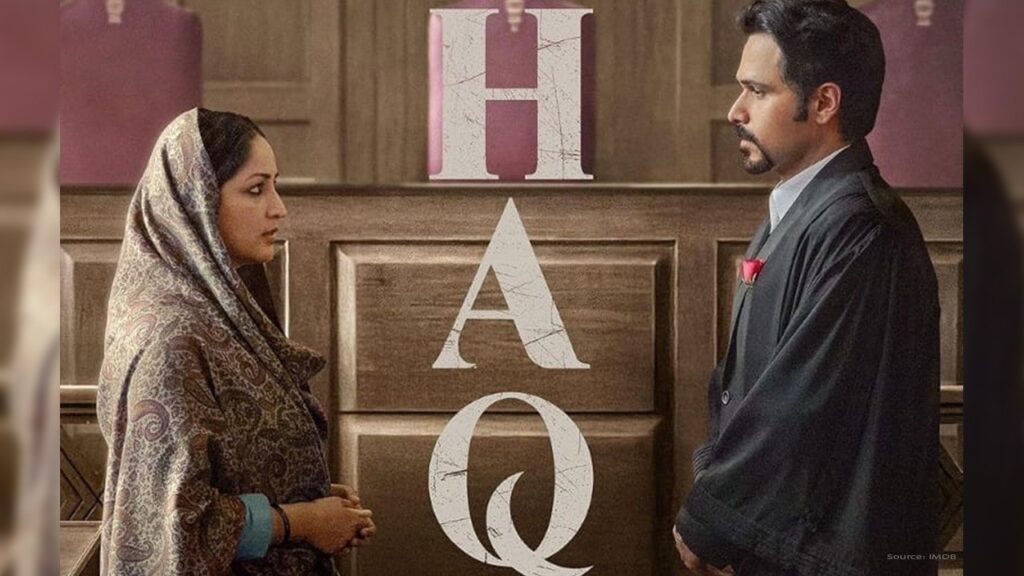
Yami Gautam as Shah Bano—grace, grit, and a courtroom that finally listens (Image Source: DXB NewsNetwork)
When Haq released on November 7, it didn’t just enter theatres—it entered conversations. Starring Yami Gautam and Emraan Hashmi, and directed by Suparn Varma; the film revisits the landmark 1985 Shah Bano case with a quiet intensity that lingers long after the credits roll. At its heart is Shah Bano Begum, a woman abandoned by her husband and left to navigate a system that seems designed to overlook her pain. Gautam’s portrayal is raw, restrained, and deeply moving—she doesn’t just act, she inhabits.
The film doesn’t lean on spectacle. It leans on truth. In one viral moment, a Muslim woman kissed Gautam’s hand in gratitude, whispering,“You told our story.” With a 100% surge in box office numbers over its opening weekend, Haq proves that storytelling rooted in empathy still moves people.
A Case That Changed India—And Cinema
Image Source: FirstPost
In Haq, Yami Gautam doesn’t just play Shah Bano—she becomes the quiet storm behind every woman who’s been asked to endure, to shrink, to disappear. The film doesn’t dramatize her pain—it dignifies it. It revisits one of India’s most emotionally loaded legal battles not with courtroom theatrics, but with a kind of stillness that demands you lean in.
The Shah Bano case wasn’t just about alimony—it was about the right to be seen, to be heard, to be counted. It was about faith, yes—but also about fairness. And Haq understands that the real drama isn’t in the verdict—it’s in the waiting, the pleading, the heartbreak that precedes it.
Gautam’s performance is a study in grace under emotional fire. Her Shah Bano doesn’t raise her voice to be noticed—she holds her silence like a blade. Every glance carries history. Every pause feels like a prayer. In the courtroom, she doesn’t just speak—she bleeds. Her voice trembles not from fear, but from the weight of generations who never got to testify.
And in those moments, Haq stops being a film. It becomes a reckoning. A quiet, aching reminder that justice isn’t just about laws—it’s about lives. Messy, complicated, deeply human lives.
By weaving legal realism with emotional truth, Haq doesn’t just revisit history—it reclaims it. It gives voice to every woman who’s been told her pain is inconvenient, her fight too loud, her silence more palatable. And in doing so, it reminds us that cinema, when it dares to listen, can become something sacred. Not just entertainment—but testimony. Not just story—but memory.
Word of Mouth Wins—How Audiences Are Owning This Film
Image Source: BhaskarEnglish
Haq didn’t arrive with fanfare—it arrived with feeling. No flashy promotions, no viral stunts. Iust a story that quietly asked to be heard. And audiences responded with something rare: wholehearted, word-of-mouth love.
By Day 2, the film’s box office numbers had doubled—not because of algorithms, but because people couldn’t stop talking about it. WhatsApp groups lit up. Instagram stories turned into mini tributes. One viewer called it“the best movie of 2025.” Another said it“touched every ounce of emotion.” These weren’t reviews—they were thank-you notes.
Yami Gautam, visibly moved, called the film’s organic success“a moment I’ll cherish for life.” And you can feel that sincerity. This wasn’t just a win for her—it was a win for every storyteller who believes that truth, when told with care, will always find its way.
In a landscape crowded with noise, Haq found its voice—and its audience—by trusting the power of quiet conviction. Sometimes, the most unexpected victories are the ones that feel most earned.
Stay updated with the latest news on The World Times. Get all the trending City News, India News, Business News, and Sports News.