
The Indian government has accelerated plans for a major infrastructure push in the Andaman and Nicobar Islands by inviting bids for key groundwork on the proposed Great Nicobar International Airport. This greenfield project, spearheaded by the Airports Authority of India (AAI), is poised to transform the remote Great Nicobar Island into a dual-use hub for civilian aviation and military operations, thereby enhancing India’s strategic footprint in the Indo-Pacific region.
The airport, located at Chingerh Village adjoining Galathea Bay, forms a cornerstone of the ambitious Great Nicobar Holistic Development Initiative. This multifaceted project encompasses not only the airport but also an International Container Transhipment Terminal (ICCT), a power plant, and a supporting township. Spanning a total land area of 166.10 square kilometres, the development aims to position Great Nicobar as a logistics powerhouse capable of rivaling Singapore, capitalising on its proximity to vital international shipping lanes.
Progress so far
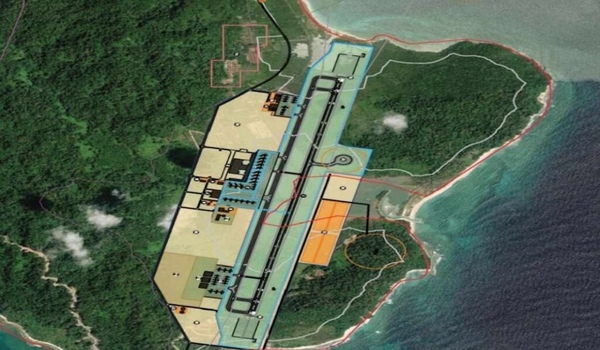
As of February 2026, the ₹8,573-crore greenfield international airport project on Great Nicobar Island has received a major boost. The National Green Tribunal cleared the surrounding ₹92,000-crore Great Nicobar mega infrastructure project, rejecting pleas to halt it on environmental grounds.
The central government, through Engineers India Limited (EIL), has issued tenders for marine geotechnical investigations at Chingerh on Great Nicobar Island to evaluate the seabed conditions required for the airport’s construction.
The project involves a greenfield international airport designed to be Code F compliant, meaning it can accommodate large aircraft such as the Airbus A380. The airport’s total area is planned at 1,039 hectares, including 194 hectares of reclaimed land. The mega project is expected to proceed in phases, with initial work focusing on core infrastructure development.
Strategic Significance
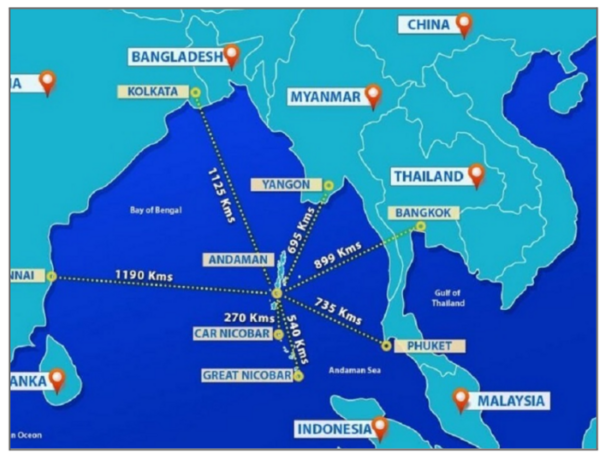
The development of the airfield is viewed as a counterbalance to China’s expanding influence in the Indian Ocean, strengthening India’s surveillance and response capabilities in the region. An official involved in the project noted, “The development of military bases, complemented by civilian infrastructure projects such as the Great Nicobar Island development initiative, reflects consolidation in this strategically vital region.”
Approximately one-third of the world’s shipping passes through the nearby Malacca Strait, making it a potential flashpoint in geopolitical tensions. By establishing a robust airfield in this region, India can enhance its anti-submarine warfare, maritime patrol, and reconnaissance capabilities, thereby deterring adversarial encroachment and ensuring freedom of navigation.
Future Outlook
The Great Nicobar project represents a bold step toward economic and strategic self-reliance. Stakeholders, including the Airports Authority of India and defense entities, are poised to advance this initiative through collaborative efforts. With groundwork underway, the coming months will reveal how India leverages this infrastructure to strengthen its position in the Indo-Pacific while driving long-term security and prosperity.
For more such updates, follow us on The World Times.