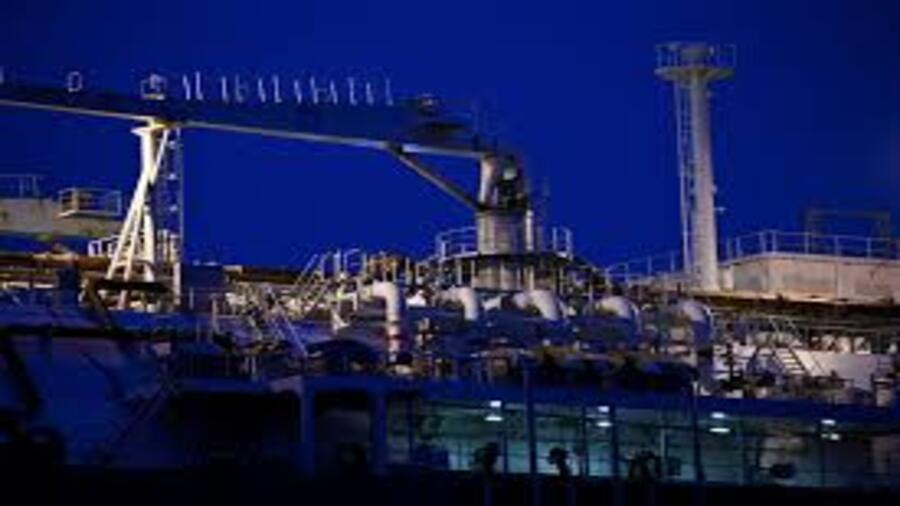
Europe’s energy security has received a major boost — Germany’s Mukran LNG terminal on Ruegen Island has resumed operations after a temporary shutdown caused by severe winter ice in the Baltic Sea. The facility, which is a key player in Germany’s pivot away from Russian gas, was forced to halt operations when heavy sea ice blocked navigable channels, preventing cargo ships from departing. Following successful ice-breaking efforts, the terminal is now back online, ensuring the continued supply of liquefied natural gas (LNG) to Germany and neighbouring countries.
Operational Resilience and Key Infrastructure
The Mukran terminal relies on floating storage and regasification units (FSRU) such as the Energos Power and Neptune. After a slow initial phase, it ramped up to record-high gas deliveries by the second quarter of 2025, establishing itself as one of Germany’s top-performing LNG import sites. The winter of 2026 brought unprecedented challenges, with frozen conditions disrupting operations. Icebreakers eventually cleared a safe passage, allowing the terminal to reopen and restore vital energy flows.
Dominance of US LNG Supplies
The United States has emerged as the dominant LNG supplier to Germany, accounting for over 90% of its imports. Across the European Union, the US share of LNG has surged from 24% in 2021 to 60% in 2025, with projections reaching 65% in 2026. Experts caution that this could potentially rise to 80% of Europe’s LNG supply by 2030. For Germany, the Mukran terminal plays a crucial role in bolstering resilience against supply disruptions.
Vulnerabilities and Future Expansions
The temporary closure highlighted vulnerabilities in Baltic Sea operations during harsh winters, but the swift resolution demonstrates the effectiveness of contingency measures. Looking ahead, Deutsche ReGas plans to expand Mukran’s capacity to 13.5 billion cubic meters per year, enhancing support for Germany and the Czech Republic. This expansion aligns with broader EU efforts to secure alternative energy routes amid ongoing geopolitical tensions.
Implications for Europe’s Energy Security
As Europe navigates the evolving energy landscape, the revival of the Mukran terminal is a positive development. It not only stabilizes immediate supplies but also reinforces Germany’s commitment to energy independence. With US LNG flows expected to increase further, the region appears poised for greater stability, though the risk of over-reliance on a single supplier remains a concern.
For more such updates, follow us on The World Times