Shift in South Korea’s Youth Activism
A similar pattern emerged in 2016, during President Park Geun-Hye’s impeachment protests. The youth were again spearheading the movement. It also created a new form of peaceful protest where civilians where seen holding candles. Candlelight had been used as a protest symbol before, yet it rise to prominence in 2016 offered a peaceful means for protesters to express their seriousness of intent. The candlelight protests, which went on for months, were significant for their absence of violence.
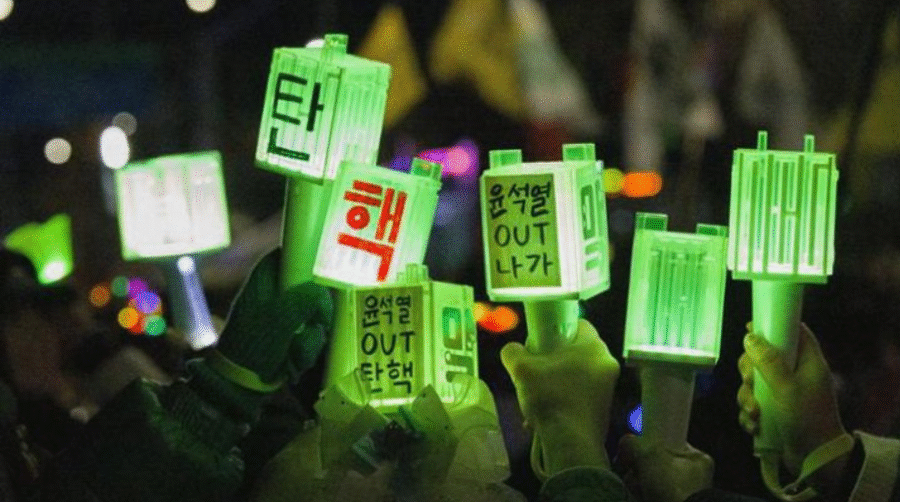
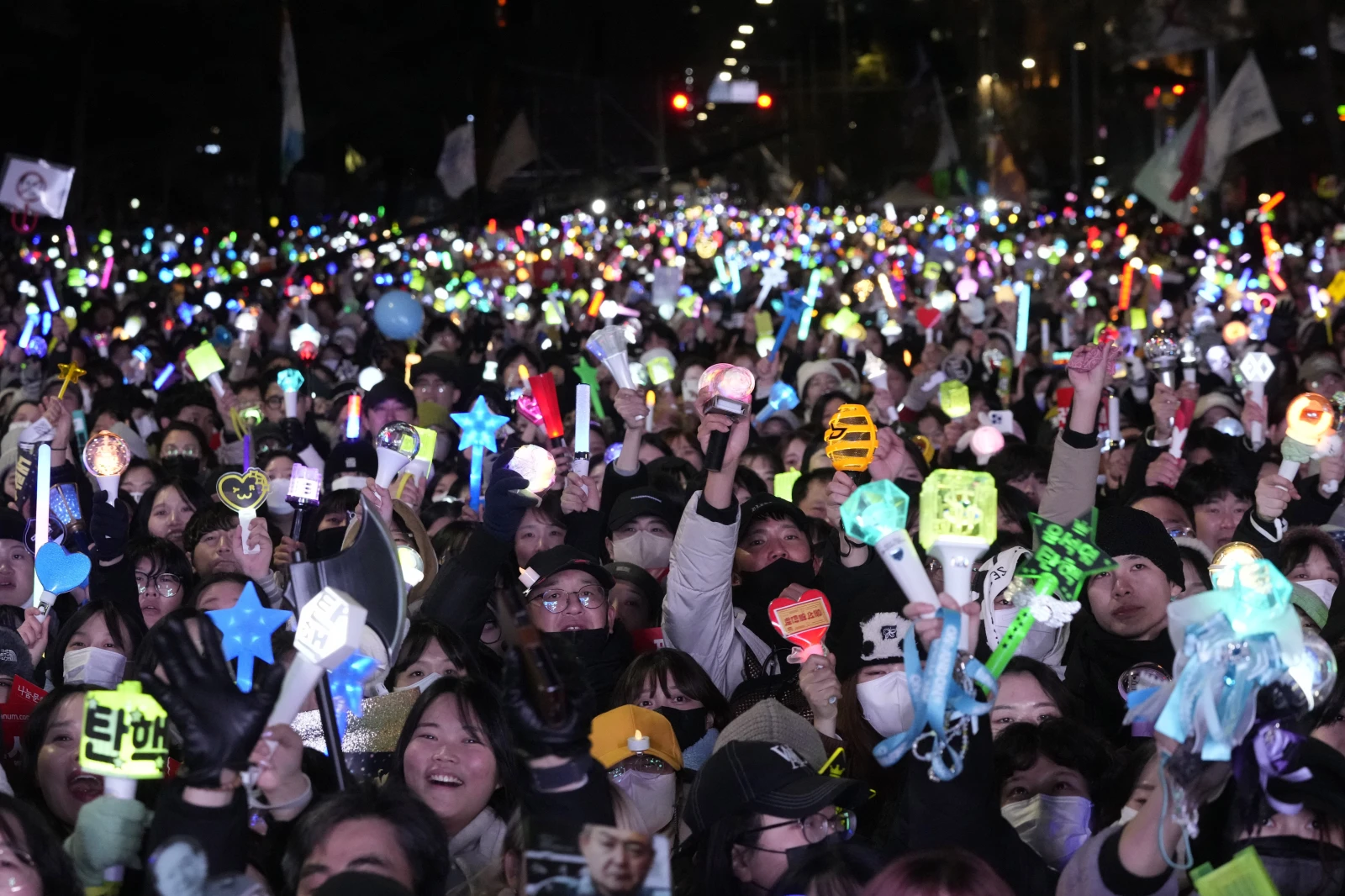
This tradition continued when President Yoon Suk Yeol attempted to institute martial law in December 2024, prompting massive protests. These protests brought in a different energy. Young people joined in, holding light sticks, singing K-pop songs, and chanting fan chants. Light sticks are official concert merchandise that represent various K-pop groups. Protesters chanted hits such as aespa’s ‘Whiplash’ and Rose’s ‘APT,’ adapting lyrics to criticize Yoon. Importantly, there was greater participation from young women than in previous movements, a group that also forms the main demographic of K-pop fans.
Global Solidarity Movements
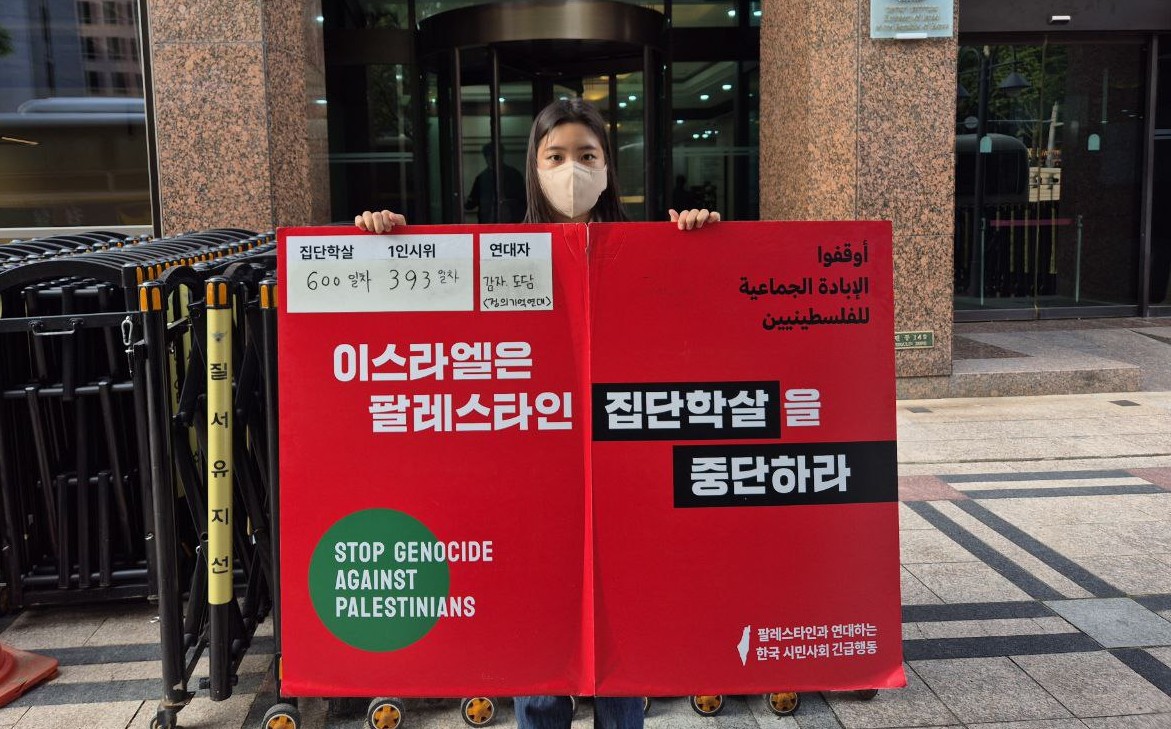
South Korean youth protests extends beyond local issues. It is common to see them at the forefront of global issues. From Black Lives Matter to Palestine movement, their involvement is present. Every day, members of the Urgent Action by Korean Civil Society choose one person to hold a banner reading “Stop Genocide” in front of the Israeli Embassy in Seoul, calling for an end to Israel’s actions in Palestine. Kim Ah-hyun, a 27-year-old activist joined the Gaza aid flotilla and was detained for the same. The youth, especially the K-Pop fandom, has rallied to support the U.S. Black Lives Matter movement. For instance, in the #MatchAMillion campaign, BTS fans raised $1 million after the group publicly expressed solidarity with the movement.
The influence of youth protests on climate change in South Korea is immense. On March 15, 2019, hundreds of students skipped classes and gathered at Gwanghwamun Square in Seoul to pressure the government to implement policies regarding carbon neutrality. This was followed by Youth4Climate Action, a group organized by teenage students, filing the country’s first climate litigation and eventually winning the case in 2024.
Building on the momentum, K-pop fans have drawn attention to concerns about the environment. For example, banners reading “Export K-pop, not fossil fuels” were displayed at COP30 on Monday, as activists urged South Korea to end its funding for foreign fossil fuel development. At the K-pop event during COP30, South Korea’s Environment Minister stated that his ministry “will support K-pop fans and their artists so that K-pop can contribute to tackling the climate crisis.”
K-pop Idols and the Boundaries of Activism
We see a shift in youth participation in political life, especially marked by the growing presence of K-pop fandom in these areas. However, the involvement of the entertainment industry itself remains limited. While civil society is very active in South Korea, idols or celebrities often face restrictions to speak up on issues. They often face backlash and cyber bullying for expressing their opinions. This contrasts with the active citizen participation at home. It is crucial to acknowledge that idols deserve the same freedom of expression as any other member of a democratic society and granting them this would allow them to use their influence responsibly and contribute to meaningful social progress.
Stay tuned to The World Times for more such content.