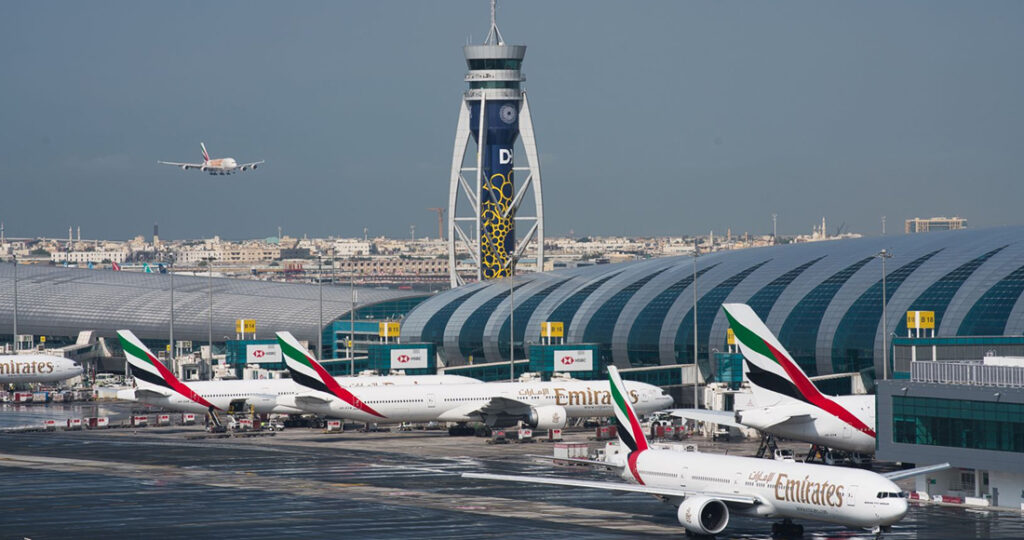
Dubai is flying higher than ever after welcoming 70.1 million passengers in 2025. The emirate has unveiled a $35 billion plan to build a next-generation mega-airport at Al Maktoum International, signalling its intent to dominate the future of global aviation.
A Legacy of Sky-High Ambition
Dubai International Airport (DXB) is one of the world’s busiest aviation hubs and holds the title of the world’s number one airport for international passenger traffic for 11 consecutive years. The long-term vision to meet growing global travel demand involves the development and eventual transition of operations to the new Al Maktoum International Airport (DWC), a massive mega-project designed for unprecedented capacity.
Strategically located as a bridge between the East and the West, DXB connects travellers to over 270 destinations in more than 100 countries, served by over 90 international carriers. In 2024, DXB welcomed a record-breaking 92.3 million passengers, surpassing pre-pandemic levels and its previous 2018 record. India consistently remains the airport’s largest source market.
DXB is the primary hub for the long-haul carrier Emirates (operating from Terminal 3) and the low-cost carrier flydubai. Despite high traffic, DXB is renowned for its operational efficiency, utilising advanced technologies such as biometric screening and smart gates to ensure a seamless passenger experience. The aviation sector is a crucial part of the city’s economy, contributing significantly to its GDP and employment.
Soaring Traffic Signals a Strong Rebound
DXB experienced a significant traffic surge in 2025, driven by the strong post-pandemic travel rebound and Dubai’s expanding role as a global connectivity hub. The airport welcomed a record 70.1 million passengers in the first nine months of the year, with annual traffic projected to reach 96 million.
The year 2025 marks one of the strongest travel recoveries in recent years, demonstrating strong global confidence in Dubai as a preferred hub. The surge represents consistent, stable growth beyond the initial recovery phase seen in previous years, with average daily passenger numbers around 254,000. The return of major global events, such as the Dubai Airshow 2025, also contributed to the increased momentum.
Dubai’s strategic geographic location between Europe, Asia, and Africa gives it a natural advantage as a connecting hub. This advantage is amplified by:
- Strong airline networks: Home to major carriers like Emirates and flydubai, the airport benefits from aggressive fleet and route expansions, including new destinations across the globe.
- Seamless transit: The airport focuses on high operational efficiency, using advanced systems like biometric passport control to ensure fast and seamless international transit, making it an attractive choice for connecting flights.
- Hub for East-West travel: Dubai’s position as a critical East-West travel nexus has become even more important as the aviation market in the Middle East, Asia, and Africa expands.
The $35 Billion Al Maktoum Mega-Airport Project
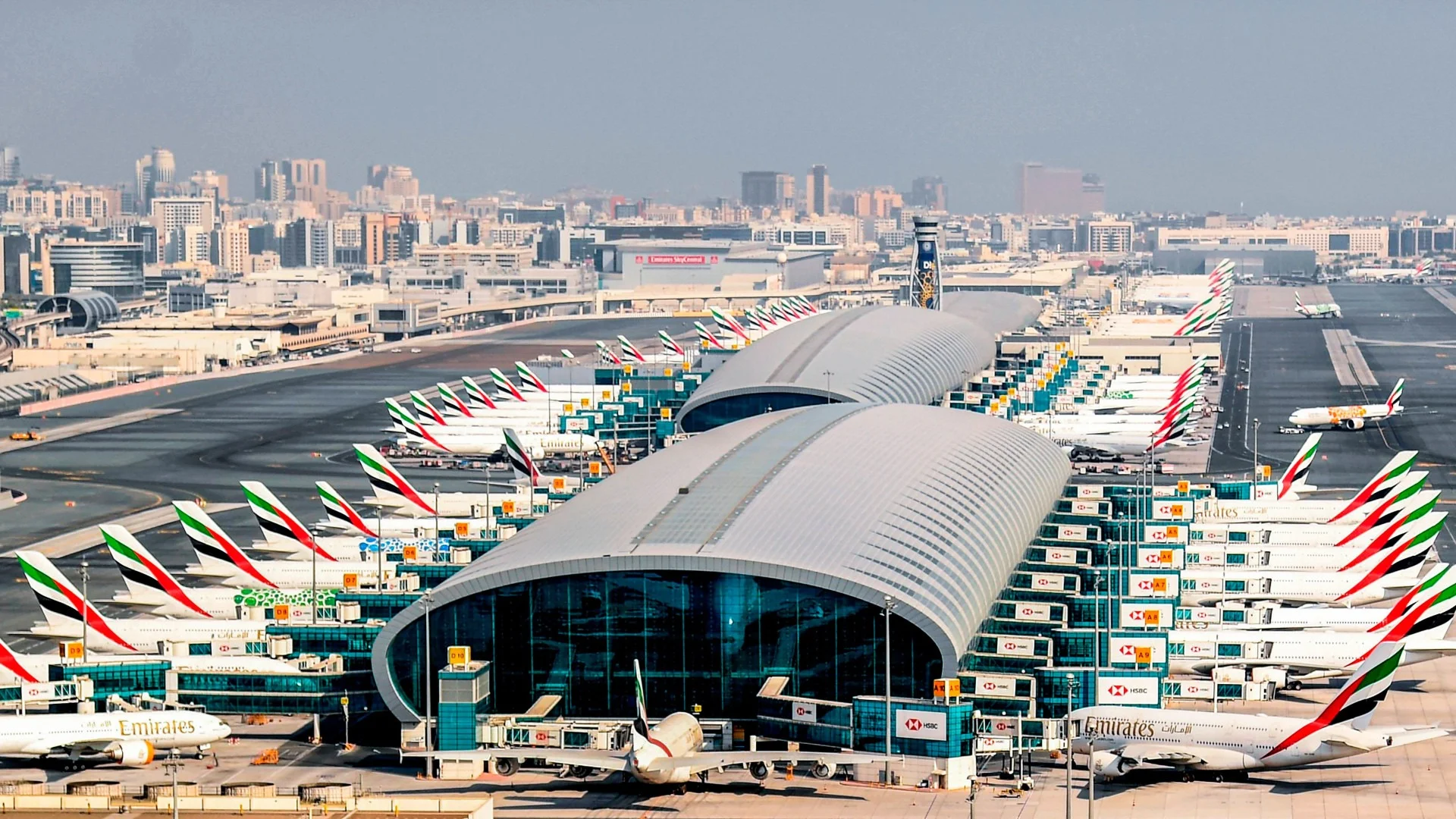
Dubai has announced a $35-billion project to transform Al Maktoum International Airport, the emirate’s second-largest airfield, into the world’s largest airport. Once completed, it is expected to overtake and eventually replace Dubai International Airport, which has remained the world’s busiest hub for international travel for the past ten years.
In addition to allowing Dubai to meet expected growth in passenger traffic for the foreseeable future, the new Al Maktoum International Airport will help Dubai fend off growing competition from Saudi Arabia.
According to The Ultimate Airport report, the expanded airport—which is also known as Dubai World Central—will cover more than 27 sq miles and feature five parallel runways. The four terminals will accommodate 400 gates, enabling the facility to handle up to 260 million passengers and more than 13 million tons of cargo a year.
An estimated 87 million passengers and 1.81 million tons of cargo passed through DXB last year. Upon completion of the first phase of Al Maktoum International Airport’s expansion in 2034, officials estimate that the airport will be able to handle as many as 150 million passengers per year.
Economic and Global Impact: Boosting the UAE’s Leadership
Passenger traffic growth at Dubai International Airport benefits the UAE economy by boosting tourism and trade, strengthening Dubai’s position as a global hub, and contributing to air travel competitiveness. This growth drives economic activity through increased tourism revenue, cargo handling, and employment, while also solidifying Dubai’s role as a critical link for global East-West travel and necessitating expansion plans to maintain its competitive edge.
Rising passenger traffic directly boosts spending on goods and services, adding billions to the UAE’s GDP. International travellers alone are estimated to generate USD 47.7 billion each year, with sectors such as medical tourism receiving substantial economic benefits.
Employment also grows alongside this demand, as the aviation industry remains one of the UAE’s largest employers, with Dubai’s airports supporting a major share of the workforce. Additionally, higher passenger movement often correlates with increased cargo activity, strengthening trade, e-commerce, and logistics operations across the country.
Dubai’s high passenger volume reinforces its status as the world’s busiest airport for international traffic, solidifying its role as a crucial hub for East-West travel. The airport’s efficiency and capacity make it a premier destination for international business, attracting more companies and investment to the region. As Dubai races past 70 million travellers, it marks the dawn of a new aviation era. With its next-generation airport taking shape, the city is preparing to welcome the world in ways never imagined before.
For more such informative articles, stay tuned to The World Times.