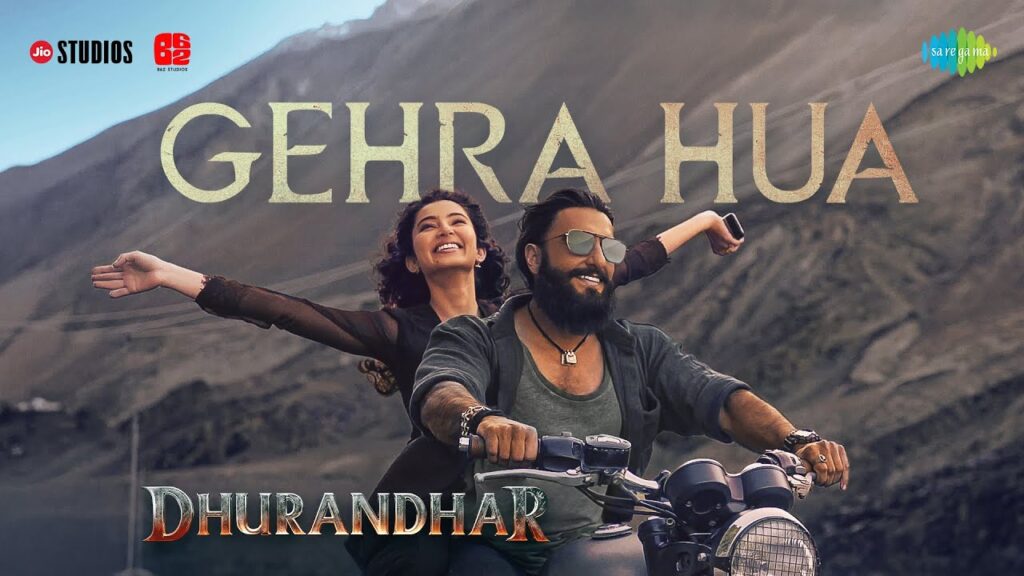
Dhurandhar is literally everywhere in its appeal. Whether for positive or negative reasons, Dhurandhar is the talk of the town. It is the first Bollywood film to have every track from its soundtrack feature in the Spotify Global Top 200. The credit for the soundtrack goes to both Aditya Dhar and musical maestro Sashwat Sachdev. Their collaboration has been very successful since Uri – The Surgical Strike, which earned Shashwat Sachdev the “Best Background Music” award at the 66th National Film Awards.
Sashwat Sachdev has been very adept in classical music. In a 2017 interview, he mentioned his favorite singers, Mohammad Rafi and Lata Mangeshkar, and how uniquely their voices complement each other. Influenced by old Bollywood music, he frequently experiments with it. He has incorporated old qawwalis and tracks by Asha Bhonsle in his soundtracks. Sachdev has also collaborated with widely acclaimed international artists such as Hans Zimmer, following his short stint in the US.
Revival Or A New Beginning?
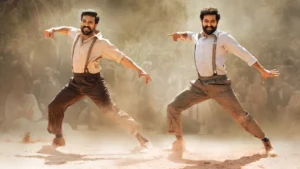
The soundtrack of RRR was a milestone in the Indian music industry. The genius of M.M. Kreem was reflected in the soundtrack. RRR played a crucial role in captivating foreign audiences with our cultural and traditional ethos, opening the global market for the Indian film industry on a huge scale after a long time. The soundtrack of RRR, comprising the background score, instrumentals, and songs, significantly enhanced the narrative flow on screen. The film reflected the successful collaboration of another director-composer duo, S.S. Rajamouli and M.M. Kreem, which ultimately earned M.M. Kreem an Oscar.
This period saw soundtrack composers experimenting with their choice of instruments, blending traditional and Western elements, and mixing EDM and hip-hop. Even background music began to play a significant role, resonating with audiences and effectively conveying a movie’s theme. Whether it’s “Pardesiyan” or “Tu Hai Toh Main Hoon,” each proved this phenomenon to be a reality. Artists such as Prashant Pandey, known for Lapata Ladies, Neeti Mohan, and Shalmali Kholgade all embraced this trend, with Neeti Mohan selecting the above two songs as her favorites of the year. These songs were not just created for Reels or trending lists; they focused on integrity, natural flow, and storytelling, as many artists remarked.
Another notable trend is the rise of regional music and its incorporation into Bollywood music, creating bridges between industries. Punjabi pop, as usual, remained at the top of the list, while Bollywood music received 25 percent more visibility. This clearly shows that the present generation values quality over quantity.
The Road Ahead
Composers like Sashwat Sachdev, Pritam, A.R. Rahman, and the Vishal-Shekhar duo are ones to watch. Indie film music is surging, with independent artists making their mark. Music production is also evolving, with technology playing a significant role. We can expect more international collaborations in the coming years, following some successful partnerships involving mainstream Indian artists such as Arijit Singh and Shreya Ghoshal. Music festivals are becoming increasingly popular in India, especially those featuring Sufi and folk elements—a positive sign of preserving cultural heritage.
Streaming platforms in India are leading the way, making the country the second-largest market by volume after the US, valued at about Rs 2,798 crore in 2022. Overall, this decade is shaping up to be a pivotal period for India in the global music industry.
For more such narratives on music, stay tuned to The World Times.