As world leaders gather in Belem for COP30, the planet’s fate hangs in the balance. From melting glaciers in Antarctica to climate protests in the Amazon, urgent action is no longer optional but essential.COP30 in Brazil brings renewed hope as nations, scientists, and activists. They unite to bridge the gap between climate pledges and real progress.
The Big Agenda: Key Goals at COP30
The 30th annual United Nations Climate Change Conference (COP30) has begun in Belem, Brazil. Global leaders are urging nations to unite in the fight against climate change.
The key goals at COP30, held in Belem, Brazil, from November 10-21, 2025, center on turning existing climate promises into tangible, accelerated action.
COP30 focuses on scaling up climate ambition; urging nations to submit stronger NDCs to close the gap toward the 1.5°C target. A major priority is expanding climate finance through the Baku-to-Belem Roadmap, aiming to mobilize $1.3 trillion annually for developing nations. The conference also pushes funding for adaptation, including the FINI initiative and the operationalization of the Loss and Damage Fund. Strengthening global resilience is central, with new adaptation indicators, health-focused policies like the Belem Health Action Plan, and expanded early-warning systems.
Held in the Amazon, COP30 highlights the urgency of protecting forests through initiatives like the Tropical Forests Forever Facility. It also emphasizes a just transition, promoting job creation and equity through the Belem Action Mechanism for Just Transition. The overall spirit of the summit centers on implementation and global cooperation. Inspiring by the Brazilian concept of “Mutiara,” they mean collective effort. COP30 aims to turn promises into action and ensure climate progress is inclusive, collaborative, and long-term.
Between 40,000 and 50,000 people, including heads of state and government from almost 200 countries, are expected to attend the 30th UN Climate Change Conference, COP30, to discuss measures for greater climate protection.
Cryosphere Crisis: Glaciers Sound the Alarm
This is the newest in a string of scientific reports warning about the state of the cryosphere, now a key focus for the WMO. In its latest Bulletin, the WMO calls it “the canary in the coal mine of the climate system.”
The report highlights a strengthening scientific consensus that the melting of the Greenland and Antarctic ice sheets—along with other factors—may be slowing key ocean currents at both poles. This shift could lead to a much colder northern Europe and increased sea-level rise along the U.S. East Coast.
Antarctica’s Hektoria Glacier shrank by nearly half its length—about 8 kilometers (5 miles)—in just two months between November and December 2022. This has been the fastest recorded retreat of a grounded Antarctic glacier. Cryosphere experts say this dramatic event shows what could happen to other vulnerable glaciers, potentially speeding up sea-level rise and putting low-lying coastal regions and ecosystems around the world at greater risk.
Climate Finance Under the Microscope
COP29 concluded with the adoption of the Baku Climate Unity Pact, establishing a New Collective Quantified Goal (NCQG) to mobilize $1.3 trillion annually from all sources, including a minimum pledge of $300 billion per year from developed countries to support developing nations by 2035. The response was mixed. Many developing countries argue that the $300 billion commitment falls short and lacks strong accountability measures.
The negotiations exposed deep equity tensions, as developing nations pushed for more grants and concessional finance; while developed countries resisted taking on the full financial burden. Tracking progress will require assessing whether the $300 billion floor is met; whether the full $1.3 trillion is mobilized, and evaluating the balance between grants and loans.
Indigenous Voices for Amazon Protection
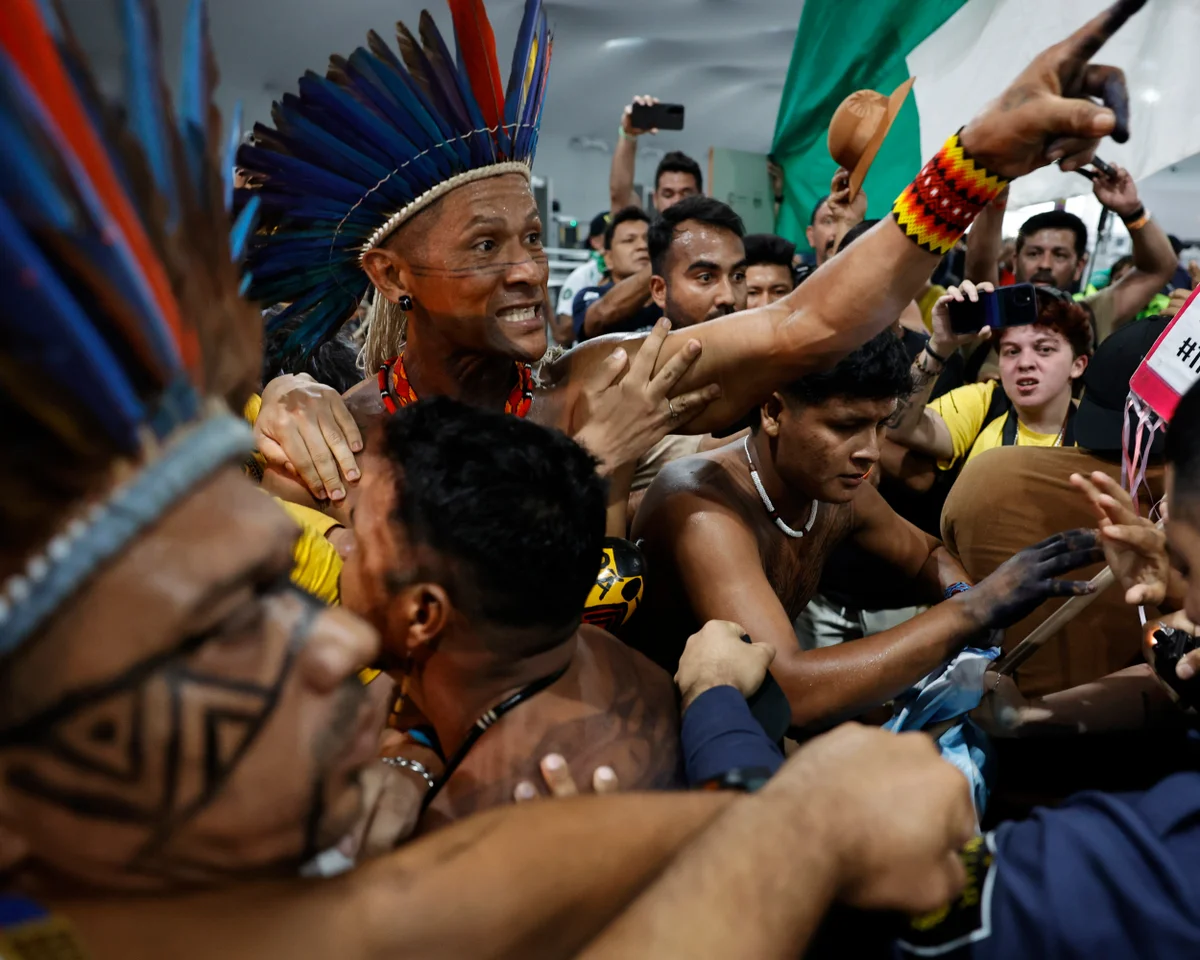
Outside the COP30 venue in Belém, Brazil, the scene is one of vibrant but tense mobilization. The indigenous peoples and youth activists stage powerful demonstrations to demand immediate action on Amazon protection and stronger government climate commitments.
Indigenous activists from across the Amazon have made a strong and highly visible impact at the summit, with some arriving by a protest flotilla that traveled thousands of kilometers down the river. Their demonstrations — including sit-ins and blockades at the venue entrance — directly oppose ongoing development on their ancestral lands.
They are demanding an immediate halt to illegal logging, mining, oil extraction, and agribusiness, declaring. Roars of “Our land is not for sale.” in the air. Their presence in Belém, on the edge of the Amazon rainforest, serves as a powerful reminder that climate destruction is happening now. In one major action, dozens of protesters stormed the venue and clashed with security, calling for real inclusion in climate decisions and underscoring their vital role in safeguarding global ecosystems.
What’s at Stake: The Road Beyond Belem
COP30 in Belem is positioned to re-energize global momentum toward net-zero by emphasizing implementation, adaptation, and climate finance; though deep-rooted issues, particularly regarding finance commitments and geopolitical divisions, present significant challenges to achieving the 1.5°C goal.
Nations are working to agree on a set of 100 indicators to measure progress toward the Global Goal on Adaptation (GGA), a critical step for improving climate resilience globally.
Hosted in the Amazon, a primary focus is forest protection. The Brazil-led “Tropical Forests Forever Facility” is set to launch. It aims to mobilize substantial funds to compensate countries for preserving tropical forests. Discussions are focused on accelerating the phase-out of fossil fuels, emphasising on tripling renewable energy capacity by 2030 and a proposed “Belem 4x Commitment” for sustainable fuels.
The Fund for Responding to Loss and Damage (FRLD), established at previous COPs. It is expected to launch its first call for proposals in Belem. The focus will be on defining access mechanisms and eligibility criteria. It is to ensure it moves from “promise to practice” for vulnerable nations.
The conference is expected to feature the largest Indigenous participation in its history. This provides a platform for traditional communities to have greater influence on decision-making processes through the new “Circle of Peoples” initiative.
For more such articles stay tuned at The World Times.