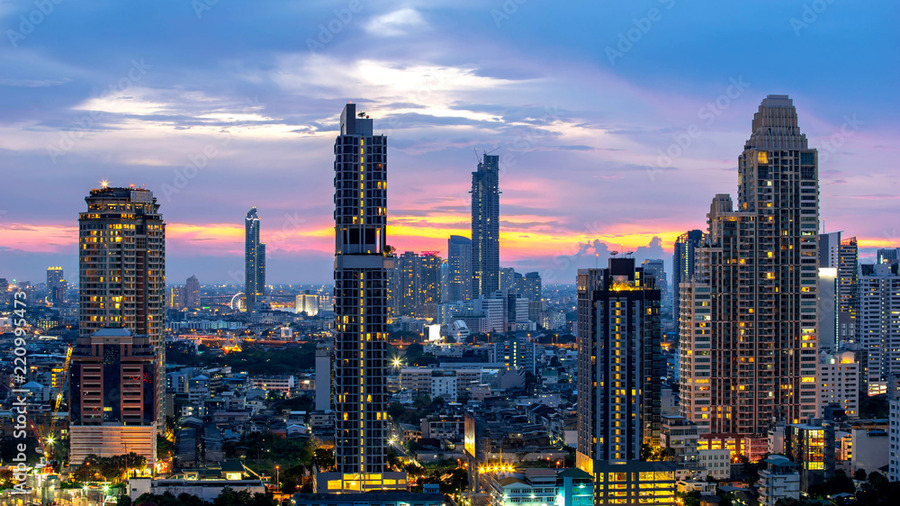
Krung Thep Mahanakhon Amon Rattanakosin Mahinthara Ayutthaya Mahadilok Phop Noppharat Ratchathani Burirom Udomratchaniwet Mahasathan Amon Piman Awatan Sathit Sakkathattiya Witsanukam Prasit. Don’t know what this is? It is the full ceremonial name of one of the most visited city in the world: Bangkok!
The Wat Arun Temple
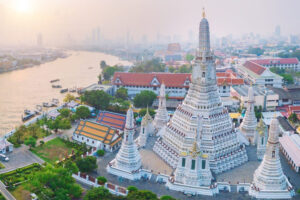
Named after the charioteer of the Sun God, Surya, symbolising the dawn and new beginnings, Wat Arun is one of Bangkok’s best known landmarks.
It’s adorned with flowers made of shells and chines porcelain. More than a million individual pieces were used.
To maintain the temple’s shine these mosaics are polished and the stucco freshened up every 10 years. This is done by hand in the Wat Arun.
One of the Supervising Conservator says:
“The white stucco is made of ground and fired sandstone making it more durable than any modern paint. It dries in just a few minutes. You can wash it and it is very resistant to rain and moisture.”
The Transportation in the Exciting City
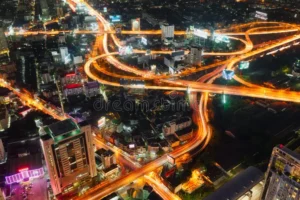
The dream of a car friendly city! For almost an entire century, planning and construction in Bangkok focused almost exclusively on motorised public transport.
These days it is possible to cross the city centre on three lines with a sky train or the underground.
There is no better way of getting from one point to another in a quick and safe manner in Thailand’s capital.
The greater metropolitan area of Bangkok is home to more than 15 million people.
Compare to the chaos of the streets, the skytrains in Bangkok feel like a completely different world. It has almost 7,00,000 passengers a day!
The Aeroplane Graveyard
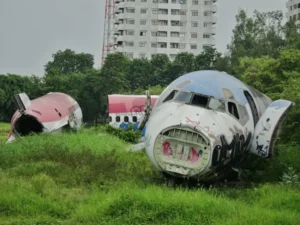
It is located near Ramkhamhaeng Road (Soi 103), is a unique, informal site featuring abandoned, graffiti-covered aircrafts.
The shells of several retired planes right here, from short haul crafts to jumbo jets.
It is not an official museum or an actual destination for tourists. The compound is owned privately and hence the visit has a fee of about 183 to 184 Thai Baht (THB) and 525 to 526 Indian Rupees (INR).
The investor had originally planned for this place to become an event oriented diner or sell off its parts but neither plan worked.
The place isn’t officially listed in travel guides yet, the best way to find this place is to look for it in the maps and ask a taxi driver by showing them a map.
The Golden Buddha, Bangkok
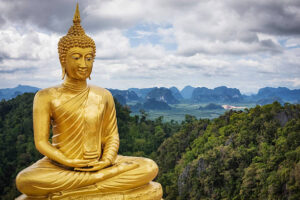
The origins of the statue are uncertain. It is crafted in the Sukhothai style of the 13th–14th centuries, although it may have been made somewhat later.
The head of the statue is egg-shaped, a typical characteristic of Sukhothai art in its most refined and fully developed phase.
Given that Sukhothai sculpture was influenced by Indian aesthetics, and that metal images of the Buddha from India were widely exported during the Pala period, it is possible that this statue reflects that influence.
The statue is 3 metres (9.8 ft) tall and weighs 5.5 tonnes. The Buddha is represented in the traditional pose of Bhumisparsha Mudra (touching the earth with the right hand to bear witness Lord Buddha’s enlightenment at Bodh Gaya and victory over Mara). The original statues of Sukhothai sit on a common pedestal form.
China Town, Bangkok
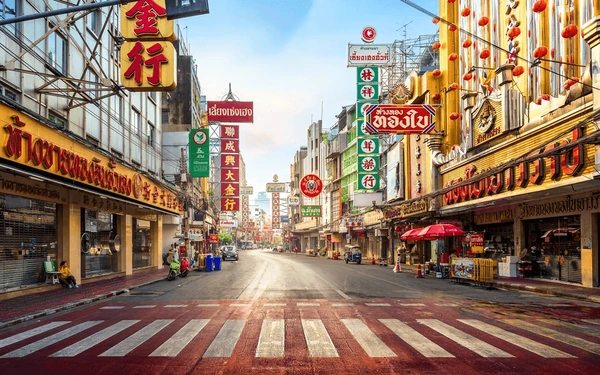
As one of the largest Chinatowns in the world, this area in Bangkok is renowned for its incredible shopping options and tantalizing cuisine.
This fast-paced district was founded over 200 years ago and went on to become the main hub for Bangkok’s large Chinese community.
Venture down Yaowarat Road, bustling with activity and brimming with shops offering an array of souvenirs, jewelry, and trinkets.
Then, stop at a family-run restaurant to grab an oyster omelet or dim sum. You can ride the metro to reach Chinatown. It’s also within walking distance from landmarks like the Wat Traimit Temple.
Stay tuned to The World Times for more such updates!