When we hear the name “jazz”, the image of Frank Sinatra under a soft spotlight, or Paul Anka leaning into a microphone, his foot tapping in time as he serenades the crowd pops into our minds. But what if this is just the tip of the iceberg, and there’s more to what it seems. Jazz is connected with struggle and revolution. It was a source through which black people started to express themselves. And the genre which influenced many more sub genres like Funk, R&B, Bluegrass and Rock in the world started in the locality of Harlem, New York.
Background
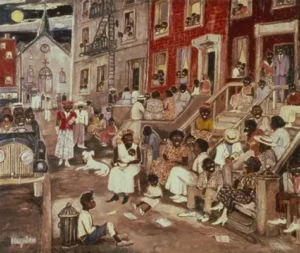
The Great migration which started around 1910s when most black communities moved from south to north due to many factors including Jim Crow segregation, economic oppression and racial lynchings. It was an incredible era in the history when there was a cultural explosion.
Nightlife of Harlem attracted socialites from every corner of New York to Harlem. But we notice the irony when a black musician was allowed to play on stage but can’t sit as a guest. Jazz in general is said to have originated in New Orleans in 1900s. It got more popular during and after World War I.
James Europe, a musician who used to play in the famed 369th US infantry division got very popular with his “jazz” renditions with the audience and captivated the European audience. James Europe was composer and band leader of the famous “Memphis Students”. This band is well known for popularizing “jazz” in New York. Well known Activist W. du. Bois was working for the rights of the black people at this time and was settled in Harlem, which was also the nest of Langston Hughes, renowned poet.
Music
Jazz is something which is always changing. It’s never static and that’s where the beauty lies. Improvisation is the key to performing jazz. Jazz encapsulates the daily lifestyle and struggles of the Black People. It calls out to every oppressed individual to embrace your individuality and celebrate it.
Many scholars have mentioned that it’s a wonder how the artist of the era never criticizes or targets any specific entity. Far from being a mere outlet for frustration, jazz was a vital tool for expressing personal and collective identity. From the period of 1900-80s Jazz went through different changes finally resulting in contemporary jazz which we have now. It involves electronic, hip hop.
Jazz also influenced the fashion trends of the era. In many ways, jazz offered women a newfound independence. It allowed them to shed restrictive Victorian norms and step into the spotlight, as musical proficiency was increasingly viewed as a hallmark of education and refinement. Whether its jazz poetry or music it is not restricted to any form of fixed structure, similar to life. And this is the “feature” which appealed to people irrespective of their identity. It broke the artificial barriers of “race” “community” “nationality”.
I would end the article with the famous words of Langston Hughes:
FreedomIs a strong seedPlantedIn a great need.I live here, too.I want my freedomJust as you.