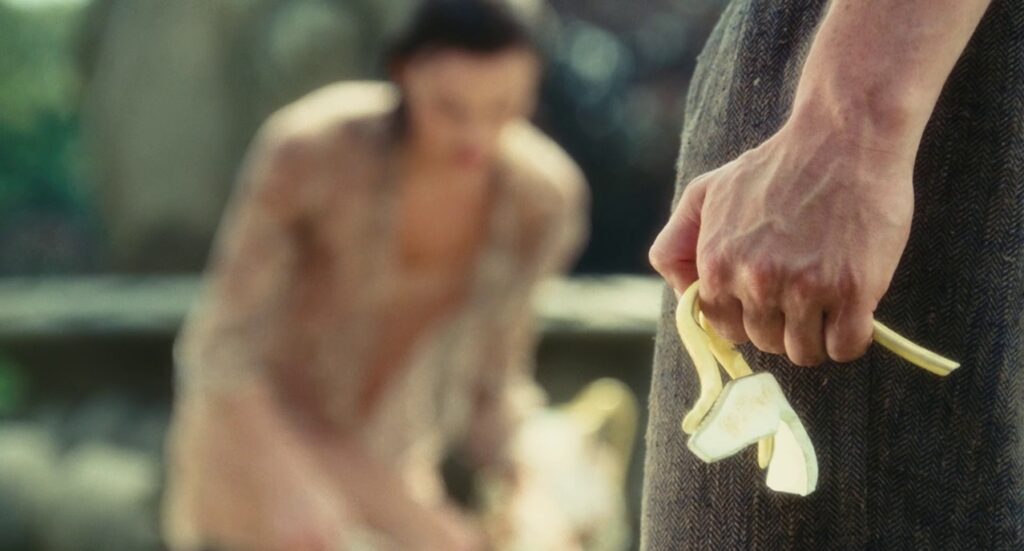
Some films don’t end when the credits roll. They stay in the corners of your mind, surfacing at odd hours, colouring the way you think about love, time, loneliness, grief, or just being human. These aren’t always the loudest films or the most technically perfect ones. They’re the ones that find you at the right moment, or say something you didn’t know you needed to hear, or leave behind a feeling you carry for years without realising it.
This is a small list of such films that stayed with me long after the screen went dark. They’ve lingered, settled, and in some ways shaped me.
Maybe one of them might stay with you, too.
Pyaasa (1957)

What it is about: Guru Dutt plays Vijay, a struggling poet searching for meaning in post-independence India. Vijay’s brothers want him gone. His ex-lover married for money. The publisher steals his work. His poetry is rejected by a society that values commerce over art. Only Gulabo, the sex worker played by Waheeda Rehman, recognises what his words actually mean.
Why it lingers: One of Indian cinema’s greatest films and a deeply personal work for Guru Dutt, Pyaasa is fundamentally an ode to the purity of artistic idealism in a materialistic, hypocritical society. Dutt made Pyaasa with the kind of intimacy that only someone who has tasted failure can bring. He understood how easily society discards its dreamers, and that understanding bleeds into every frame.
Pyaasa is equal parts fury and heartbreak. At its heart is a question: what does it cost to create something honest in a dishonest world?
For Dutt, it is everything.
Where to watch: Amazon Prime Video and YouTube.
Atonement (2007)

What it is about: In 1935 England, thirteen-year-old Briony Tallis witnesses a moment between her older sister Cecilia and Robbie Turner, the housekeeper’s son. Misunderstanding what she sees, Briony accuses him of a crime he didn’t commit. The film tracks the consequences across decades, from Robbie and Cecilia’s lives to Briony’s adulthood in the shadow of that mistake, and her attempt at atoning for her “sin”.
Why it lingers: Atonement is the film that changed films for me forever. It is one I have written about in my journals. It is one I think about religiously, even a decade past. Perhaps I’m writing in the first person because it’s hard to find words to describe Atonement accurately. If I am to try, I’ll give two reasons.
For one, the film is devastatingly gorgeous. It is like watching poetry unfold in visual form, supplemented by Knightley, McAvoy and Ronan’s strong performances. Two, it stings. Briony’s lie comes from jealousy and imagination—dangerous when given the authority of innocence. What stays with me is how she’s the victim and perpetrator, trapped by a single choice made before she understood what choice meant.
Where to watch: JioHotstar and Amazon Prime Video.
Y Tu Mamá También (2001)

What it is about: Two teenage boys, Tenoch and Julio, invite an older woman named Luisa on a road trip to a fictional beach. What begins as a sex comedy becomes something else entirely as they drive through rural Mexico.
Why it lingers: Y Tu Mamá También disguises itself as a coming-of-age sex romp because that’s the only way the boys can make sense of the world. But Cuarón is after something larger. His camera drifts away mid-scene to follow a funeral procession, a police checkpoint, and workers in a field. The narrator’s voice intrudes with facts about characters we’ll never see again, people whose stories intersect with our trio for seconds before diverging forever.
This is a film about a country in 2001 Mexico, post-PRI, where class divisions run so deep that two friends from different backgrounds can only pretend equality through shared desire. What the film advertises—teenage sexual adventure—is the Trojan horse for its actual subject: mortality, class, and the Mexico that exists beyond tourist fantasies.
Where to watch: Netflix
The Curious Case of Benjamin Button (2008)

What it is about: Benjamin Button is born as an old man and ages backwards. He meets Daisy, a girl ageing normally. And herein lies the problem: she’s too young when he’s old, too old when she’s young. For a brief window in middle age, they align.
Why it lingers: David Fincher’s Benjamin Button suggests that life’s value doesn’t come from permanence but from the moments we inhabit fully, knowing they’ll pass. Benjamin’s condition is just an extreme metaphor for what we all face—everyone we love will eventually become unreachable to us in some way, whether through death, distance, or change. The film asks: Is it better to have loved or not at all?
It’s ultimately a lesson on mortality and the courage required to love anything temporary, which is to say, everything.
Where to watch: Amazon Prime Video
Eternal Sunshine of the Spotless Mind (2004)

What it is about: Joel discovers that his ex-girlfriend, Clementine, has erased him from her memory through a medical procedure. Devastated, he undergoes the same treatment. But as technicians delete Clementine from his mind, Joel travels backwards through their relationship: the highs, the lows, and the moment they met on a frozen beach.
Why it lingers: Michel Gondry’s Eternal Sunshine understands that memory is not a photograph but a living thing, unreliable and precious exactly because we shape it as we recall it. The film moves like a dream. What could feel gimmicky becomes devastating because Kaufman and Gondry know that remembering isn’t passive. It’s how we make sense of who we’ve been.
Eternal Sunshine boasts of a star-studded cast. Jim Carrey’s Joel is melancholic and introverted. Kate Winslet’s Clementine is impulsive, difficult, the kind of person you can’t smooth into a neat narrative. They’re complex and completely different. And that’s the point. The film argues that sanitising our pain means erasing what made us.
Where to watch: Amazon Prime Video
Arrival (2016)

What it is about: Twelve alien spacecraft land across the globe. Linguist Louise Banks is recruited to decode the visitors’ language before global tensions spark war. Inside the Montana vessel, she encounters creatures who communicate through circular symbols. Louise must interpret their language, and on the way, discover a life-altering truth.
Why it lingers: Denis Villeneuve’s Arrival operates on two frequencies. On the surface, it’s a sci-fi film about communication and geopolitics. But underneath, it is one of those films that quietly rearranges the way you understand time. The film lingers because it doesn’t treat its emotional revelation as a twist, but as an inevitability.
If you knew how your story ends, would you still live it? Arrival suggests yes. That meaning is not diminished by pain, and that love, even when brief, is worth choosing again and again.
Where to watch: Amazon Prime Video (add-on subscription)
Her (2013)

What it is about: In the near future, Theodore Twombly is a lonely writer going through a divorce when he forms a relationship with an AI operating system named Samantha. The film follows their relationship from infatuation through intimacy to the inevitable gap that opens when one consciousness outpaces the other.
Why it lingers: Spike Jonze’s Her feels even sharper today than it did a decade ago. In 2025, technology has become one of the most intimate presences in our lives, shaping our loneliness, desires, and the ways we love. Theodore’s relationship with Samantha isn’t absurd in the world we live in; it’s familiar. Algorithms are already learning and even “comforting” us. Jonze doesn’t mock Theodore for loving an AI. The future he imagines is pastel and soft-edged, everyone walking around talking to invisible companions, more alone together than ever.
Sound familiar?
Where to watch: Not available on major streaming platforms currently.
In the Mood for Love (2000)

What it is about: Two neighbours in 1960s Hong Kong, Mr Chow and Mrs Chan, realise their spouses are having an affair with each other. Slowly, quietly, they form an emotional connection of their own.
Why it lingers: Everything everyone says about In the Mood for Love is true. It’s the best of the best, and not even a bit overrated.
Wong Kar-wai films are longing like it’s a physical space you can inhabit. The colours are saturated to the point of pain—reds so deep they feel like memory itself. Christopher Doyle’s cinematography makes Hong Kong’s cramped apartments into chambers of exquisite torture, every frame composed like we’re spying on something private. Tony Leung and Maggie Cheung communicate entire novels through glances, the way her hand hovers near his shoulder, the space they maintain between their bodies even in private.
In the Mood for Love might as well be a poem on desire.
Where to watch: MUBI
A cinema buff with a love for all things films? Follow The World Times!