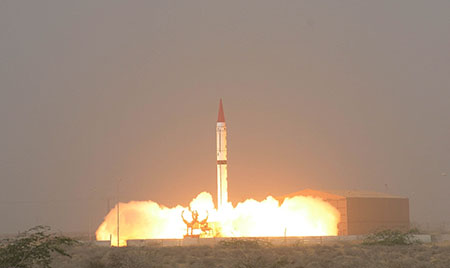
The United States has identified advancing Missile Programme of Pakistan as a potential long-term security concern, placing it alongside major powers such as China, Russia, North Korea and Iran. The assessment came during the 2026 Annual Threat Assessment presented before the Senate Intelligence Committee.
Director of National Intelligence Tulsi Gabbard said these countries are developing advanced missile systems capable of carrying nuclear and conventional payloads. She warned that future developments could eventually bring US territory within range. The report stated that Pakistan continues to improve missile technology and may expand its strike capability beyond South Asia in the coming years.
Focus on Future Capabilities and Strategic Risks
The assessment emphasised potential future threats rather than current operational capability. It noted that the country could develop intercontinental ballistic missiles if existing technological trends continue.
The report also warned that missile advancements could challenge US defence systems and increase options for deploying weapons of mass destruction. Officials projected that global missile threats could rise sharply, with numbers increasing significantly by 2035.
Experts, however, questioned the assessment and pointed out that Pakistan’s current missile range remains regionally focused. The Shaheen-III missile, Pakistan’s longest-range system, covers around 2,750 kilometres and targets regional adversaries rather than distant continents.
Analysts argue that Pakistan’s nuclear doctrine focuses on deterrence against India and does not indicate global military ambitions.
Pakistan Rejects Claims, Cites Defensive Doctrine

It strongly rejected the US assessment and described its missile programme as purely defensive. Officials from the foreign ministry said the country follows a policy of credible minimum deterrence to maintain regional stability.
They emphasised that Pakistan’s capabilities aim to safeguard sovereignty and prevent conflict rather than project power beyond its region. Officials also highlighted concerns over India’s longer-range missile developments, which extend far beyond South Asia. The report also flagged South Asia as a region of enduring security challenges. It warned that tensions between India and Pakistan continue to pose risks of escalation despite both sides avoiding open conflict.
The development highlights growing global concern over missile proliferation and underscores the fragile balance of deterrence in nuclear-armed regions.
Stay Tuned with The World Times for Latest updates.