Certain fashion images acquire a peculiar afterlife. They linger quietly in the cultural imagination, resurfacing years later with the same quiet magnetism they carried the first time around.
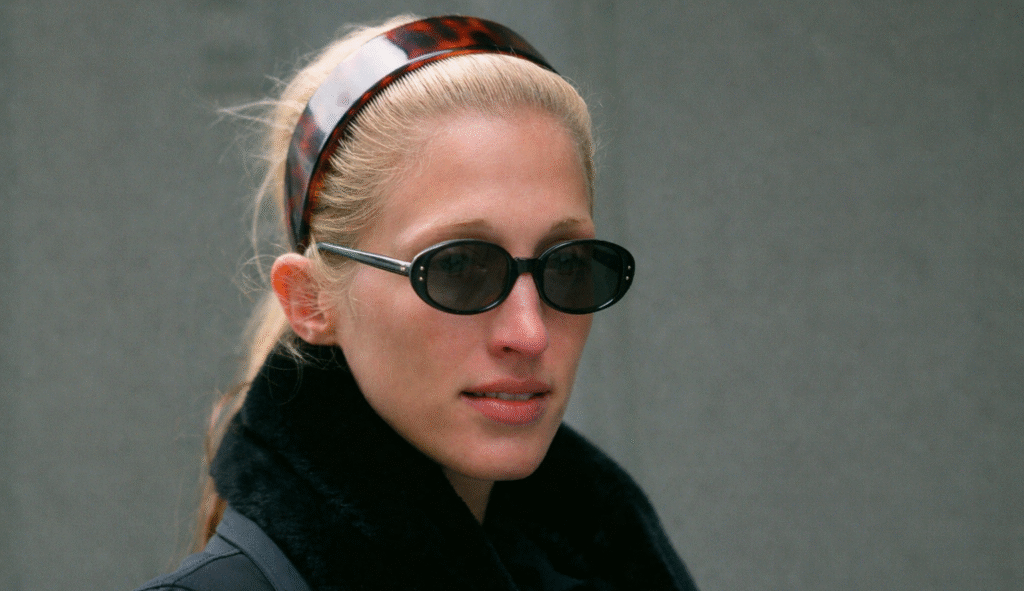
Take Carolyn Bessette-Kennedy striding through Manhattan sometime in the mid-1990s. The uniform is instantly recognizable now: a camel wool coat from Jil Sander grazing just below the knee, slim black sunglasses shielding an unreadable expression, and a silk slip dress gliding softly beneath the coat’s clean, architectural lines.
Effortless. Restrained. And, oh so chic.
Today those paparazzi photographs drift endlessly across Instagram and Pinterest like fashion relics: sun-washed, slightly grainy glimpses of Bessette-Kennedy moving through SoHo with a composure that feels both both instinctive and impossibly refined.
Fashion TikTok has tried, of course, to name the aesthetic.
Quiet luxury. Old-money minimalism. ’90s Manhattan chic.
And yet the labels never quite land.
They describe the clothes, perhaps. But not the atmosphere she carried with her.
Because Gen Z isn’t simply fascinated by the wardrobe. They’re captivated by the woman.
The CBK Revival
Part of that renewed fascination arrives at a curious cultural moment. A forthcoming FX series, Love Story, from Ryan Murphy, which dramatizes Bessette-Kennedy’s relationship with John F. Kennedy Jr..
Suddenly, a woman who once existed largely in paparazzi flashes and fashion mythology has slipped back into the cultural conversation.
This time, however, she is being rediscovered by a generation that never actually lived through the 1990s.
Minimalism Before It Was a Trend
Long before minimalism became a Pinterest mood board or marketing buzzword, Bessette-Kennedy was already living inside its philosophy.
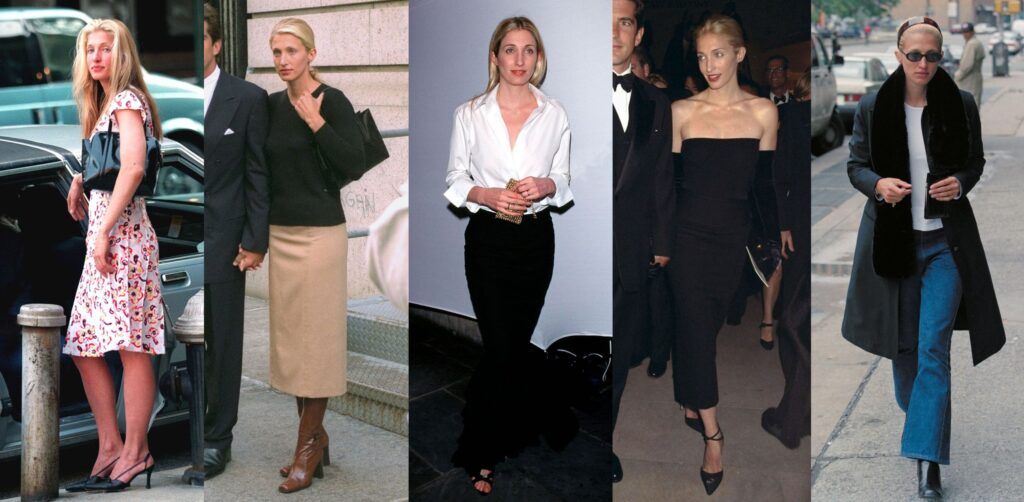
In the early ’90s she worked as a publicist at Calvin Klein, precisely when the label was redefining American fashion through a language of restraint: streeped-back tailoring, neutral palettes, and infamously famous heroin chic silhouettes that felt deliberate yet unforced.
Look closely at the photographs now and the wardrobe reads almost like a masterclass in modern minimalism. Satin slip dresses that could have stepped directly off a Calvin Klein runway, paired with delicate heels from Manolo Blahnik. Long wool coats in camel and charcoal that echo the architectural precision of Jil Sander. Sleek boots and sharply cut blazers recalling the cerebral tailoring of Helmut Lang.
But the remarkable part of it all? None of it feels formulaic.
If anything, the consistency reads as quiet discipline — the elegance of someone who understands that great personal style often emerges from editing rather than accumulation.
The Anti-Influencer Appeal
There’s another reason those photographs continue to resonate today.
Bessette-Kennedy belonged to a pre-internet era of celebrity, one that existed just before the internet collapsed the boundary between public image and private life.
Paparazzi might photograph a cool girl in her Calvins walking somewhere with purpose, or her controversial 1997 Central Park scuffle. But those images rarely arrived with explanation.
For a generation raised on perpetual self-documentation, that distance feels almost radical. Bessette-Kennedy’s public image was defined by what remained unseen as much as by what was photographed.
And, in retrospect, she represents something increasingly rare: a style icon formed before the age of personal branding.
The Love Story That Became Cultural Lore
The fascination with Carolyn is inseparable from the mythology of the Kennedy dynasty itself.
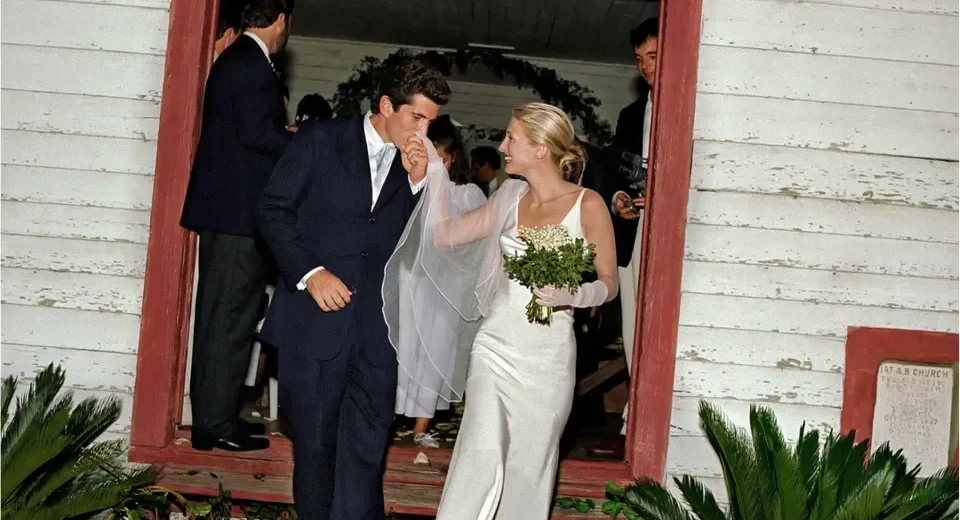
Her relationship with John F. Kennedy Jr. carried all the narrative elegance of the modern American Love Story: the charismatic heir of political royalty and the elegant fashion insider who caught his eye. Their secret 1996 wedding on Cumberland Island with a kind of cinematic intimacy. Small. Luminous. Hidden from the press until the final moment.
But privacy proved fleeting. Soon the couple became a tabloid fixation. Photographers trailed them through Manhattan. Gossip columns dissected their marriage with forensic precision.
Then, in 1999, tragedy abruptly ended the story. Bessette-Kennedy, Kennedy Jr., and her sister Lauren died in a plane crash off Martha’s Vineyard. The moment sealed the couple permanently in cultural imagination.
And it froze Carolyn’s image along with it.
There would be no later reinvention, no carefully curated social media presence reshaping the narrative decades later. The Carolyn the world remembers — the sunglasses, the slip dress, the composed detachment — is the Carolyn who remains. Suspended in time.
Why Gen Z Keeps Returning to CBK
Young fashion enthusiasts now study those old paparazzi photographs the way archivists study film stills. Entire mood boards are built around what people now call the CBK aesthetic.
And yet the fascination extends beyond clothing. What Bessette-Kennedy seems to represent, especially to a generation raised online, is a kind of cool that feels increasingly rare. The style was immaculate, yet never performative. The restraint felt refreshing.
Maybe that’s why the photographs keep resurfacing, revealing just enough to sustain the intrigue. The rest remains unknowable.
And in an era where everyone is constantly narrating themselves, that lingering mystery may be the most compelling style statement of all.
Stay tuned to The World Times for more on fashion, culture, and the icons who shape them.