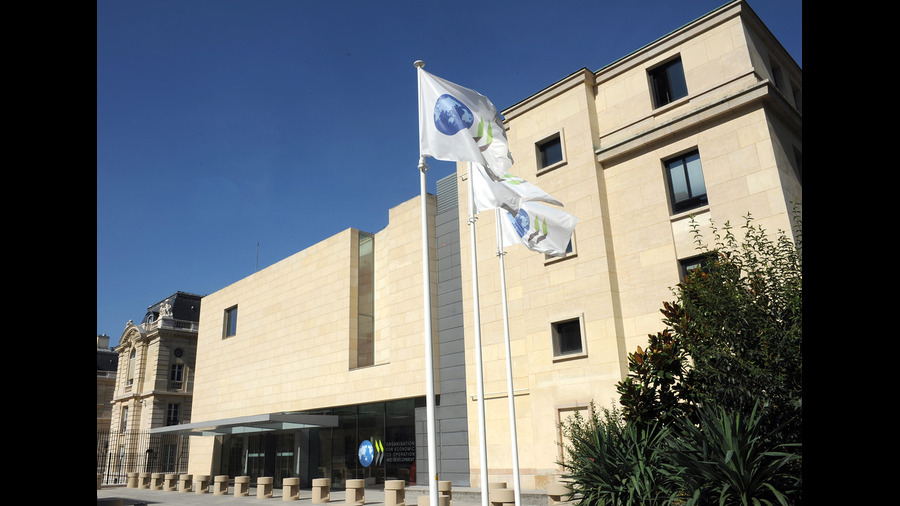
For many students studying international relations, public policy, or environmental policy, policy careers in international organizations often appear distant and difficult to access. Institutions such as the Organisation for Economic Co-operation and Development shape major global policy discussions, yet the pathway into these organizations can seem unclear.
Through a conversation with a Junior Project Manager working with the Climate Club Secretariat hosted by the OECD, this article explores how young professionals can navigate the path to international policy careers. Her journey offers insights into the experiences, skills, and mindset that can help students enter international institutions.
Discovering Policy at Sciences Po
The policy professional’s interest in policymaking began during her time in Paris, where she arrived to complete the final year of her bachelor’s degree as part of a double-degree program.
Her arrival coincided with a period of intense political debate in France, particularly surrounding pension reforms. Being in such a politically active environment exposed her to policy debates that eventually sparked her interest in governance and policymaking.
This experience led her to pursue further studies at Sciences Po, where she focused on European policy and foreign affairs.
As she explains, the idea of European cooperation deeply inspired her:
“The project of the European Union has always been extremely inspiring for me… so many countries came together voluntarily with a long-term project of unity.”
From Energy Geopolitics to Climate Policy

During her master’s program, she chose to study a course in Geopolitics of Energy. One of her professors, who later joined the International Energy Agency, played an important role in shaping her interest in energy and environmental policy.
Her personal background also influenced this interest. Growing up in a small industrial city exposed her to the close relationship between industry, communities, and environmental challenges. This experience encouraged her to explore the intersection between industrial development, energy policy, and climate governance.
As a result, she began taking additional courses on environmental politics and energy transitions.
Securing an Internship with the Climate Club Secretariat
In the final year of her master’s program, students had the option to complete a thesis, undertake a research project, or pursue a professional internship. She chose the internship route to gain practical exposure to policymaking.
She began her internship in January 2025, but reaching that stage required persistence. She submitted numerous applications to European institutions, international organizations, and consulting firms.
Her opportunity with the Climate Club Secretariat came through both preparation and initiative. After submitting her application through the official portal, she later saw a LinkedIn post about the role and decided to send an email expressing her interest and explaining how her skills aligned with the position.
Shortly afterward, she was invited for an interview and received an offer within a week. Following her internship, she was offered a contract to continue working with the team.
Skills That Help Candidates Stand Out
Reflecting on the hiring process, she believes that having diverse skills and experiences helped her stand out.
She notes that the role required a combination of flexibility, technical understanding, and communication abilities.
“The role needed a strong element of flexibility and motivation… I had some technical knowledge but also experience with communication and teamwork.”
This combination allowed her to present herself as a candidate capable of adapting to different tasks and responsibilities—an important quality in international policy environments.
Learning Professional Skills Beyond the Classroom
Another lesson she emphasizes is the importance of time management and prioritization, skills that are often learned more in professional environments than in university classrooms.
As she explains:
“You really need to set your boundaries and understand when to work on what, to deliver everything at a good level and on time.”
Working on Industrial Decarbonization
She currently works on industrial and environmental policy, with a particular focus on industrial decarbonization aligned with the Paris Agreement.
Her work involves bridging the gap between technical expertise and policymaking. Climate and industrial policies often involve complex technical discussions, yet policymakers must translate these technical insights into practical and politically viable policies.
Much of her daily work therefore focuses on facilitating dialogue between experts and policymakers while helping translate technical discussions into policy frameworks that can be implemented effectively.
Advice for Students Interested in International Organizations
For students aspiring to work in organizations such as the OECD, she stresses the importance of focusing on areas that genuinely interest them.
She also notes that financial constraints within international institutions sometimes limit the number of opportunities available for young professionals. However, students can improve their chances by understanding the type of work organizations are doing and identifying where their interests align.
Networking is another important element. Engaging with professionals in the field and learning about ongoing projects can help students discover opportunities that may not always be immediately apparent.
Above all, she emphasizes persistence and curiosity as essential qualities for those pursuing careers in international policy.
Defining Success and Looking Ahead
Reflecting on her career so far, she explains that her understanding of success has evolved since entering the professional world.
“Success for me is to continue working on topics that interest me… and knowing that I’m contributing, even in a small way, to a positive impact on society.”
Looking ahead, she hopes to deepen her expertise in climate and industrial policy, although she remains open to different paths.
She also emphasizes the importance of flexibility early in one’s career:
“The first part of your career is a time to build your professional self… different experiences and different skills help you grow.”
For aspiring policy professionals, her journey offers an important reminder: careers in international organizations are rarely linear, but with curiosity, adaptability, and persistence, they are certainly within reach.
For more such informative articles, stay tuned to The World Times.