
Energy Secretary Ed Miliband has firmly rejected calls to lift Labour’s ban on new North Sea oil and gas licenses, even as Denmark moves to extend production until 2050 and the energy transition accelerates.
UK North Sea policy under scrutiny
Labor’s no-new-licenses rule remains in place, with existing ones allowed to run their natural course and limited timebacks permitted. The policy supports the 2050 net-zero target and includes a high windfall tax on profits. Miliband insists new drilling would not meaningfully lower household bills, as prices follow international markets.
Denmark’s Pragmatic Adjustment
In February 2026, Denmark signalled it may extend key North Sea licenses, such as the Tyra field (due to expire in 2042, which is potentially to 2050). While new licensing ended in 2020 and the country still aims for 2045 climate neutrality, the government cited Europe’s energy security needs and invited operators to explore extensions within existing climate commitments.
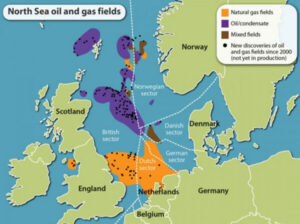
Pictorial representation showing the presence of oil and gas fields in the North Sea region. Source: Carnegie Endowment for International Peace
Industry and political Pressure
Critics argue the UK’s stricter stance risks jobs in Scotland and the northeast, cuts tax revenue, and boosts reliance on higher-emission imports. The Denmark shift has intensified calls for change, with think tanks, industry bodies, and some former labor figures urging reconsideration amid Middle Eastern supply risks and rising prices.
Denmark’s pragmatic Shift
In February 2026, Denmark announced it was exploring extensions to its North Sea production licenses, potentially until 2050, for key fields like the Tyra hub (currently set to expire in 2042). This follows the country’s 2020 North Sea agreement, which ended new licensing rounds and targeted a fossil fuel phase-out by 2050 to meet 2045 climate neutrality goals. The government cited Europe’s heightened energy security risks and the need for greater independence, inviting operators such as the Danish Underground Consortium (DUC) to assess extensions within existing climate frameworks. The move represents a flexible adjustment rather than a full reversal, balancing green ambitions with reliable domestic supply.
Miliband’s Response and Broader Implications
In recent parliamentary statements, Miliband doubled down on the policy, describing abandonment of renewable commitments as “dangerous and reckless” amid climate risks being the primary long-term threat. He acknowledged the North Sea’s role in diverse supplies but insisted the focus must remain on accelerating clean energy transitions. The government continues to partner with industry on managing existing assets responsibly.
This contrasts with Denmark, highlighting ongoing tensions in the UK energy strategy: aggressive net zero targets versus pragmatic energy security considerations. As debates intensify ahead of key summits and domestic reviews, the issue remains a flashpoint in balancing climate goals, economic impacts, and supply reliability.
For more such updates, Follow us on The World Times.