SEOUL, Jan. 19, 2026 — As Asia re-emerges as a central arena for global culture, diplomacy, and soft power, Cambodia’s Angkor Wat offers renewed insight into the enduring flow of civilization across the continent. Indeed, the history highlights deep civilizational linkages connecting India, Southeast Asia, and the Korean Peninsula. Furthermore, these connections are gaining relevance amid shifting geopolitical and cultural alignments in Asia.
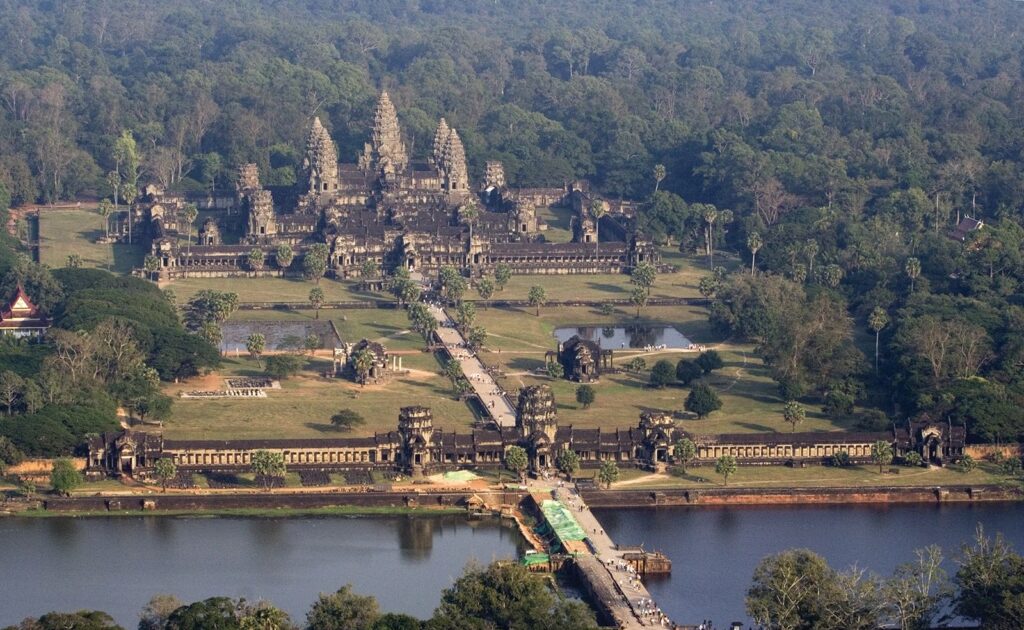
Built in the early 12th century at the height of the Khmer Empire, Angkor Wat stands as one of humanity’s most significant civilizational achievements. Beyond its scale and architectural sophistication, the monument integrates political authority, religious belief, and cosmological thought. It also incorporates advanced engineering into a single civilizational statement. The monument features intricate reliefs depicting scenes from the Indian epic Ramayana. These carvings reflect the transmission of Indian spiritual and cultural traditions across Southeast Asia. Such representations highlight how cultural influence in Asia historically travelled through ideas rather than conquest.
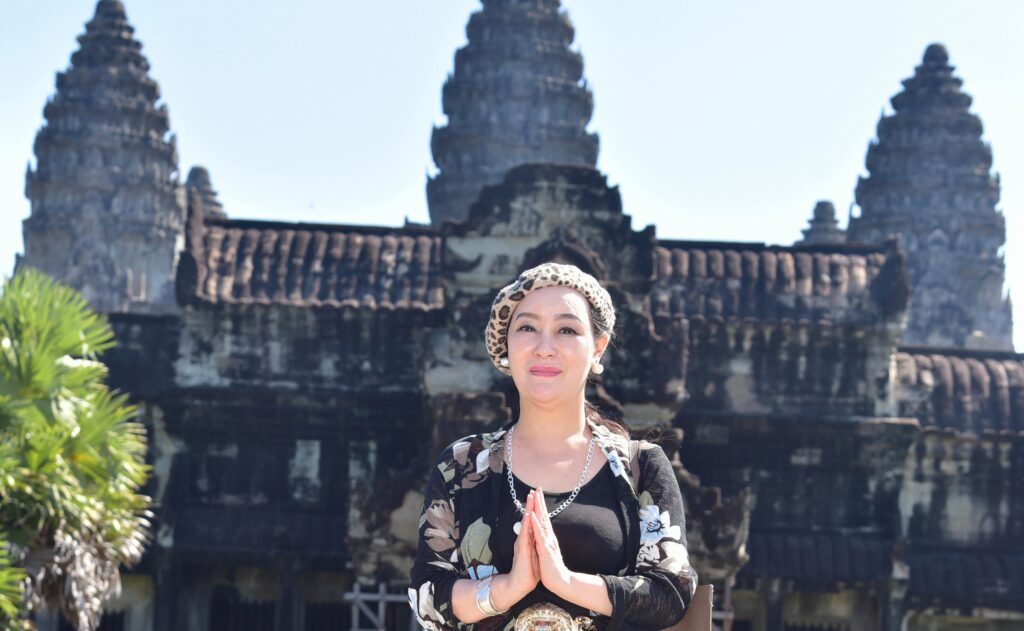
“The life and philosophy of Lord Ram—the spiritual foundation of Diwali, India’s most significant festival—are preserved not in India alone, but deep within the heart of Southeast Asia” says Dr Zena Chung, Founder and Chairperson of the Indo-Korea Business Culture Center (IKBCC), in her essay “Lessons from Civilization Read at Angkor Wat.”
Significantly, these shared traditions point to a wider historical continuum. Ancient maritime and land routes shaped it, carrying ideas, beliefs, and people across regions. Within this context, the historical account of Queen Heo Hwang-ok’s journey from Ayodhya to the ancient Gaya kingdom in Korea assumes renewed relevance. It illustrates an early civilizational exchange between India and Korea that predated modern diplomacy by centuries.
Major Korean clans, including the Gimhae Kim, Gimhae Heo, and Incheon Lee, trace their origins to this narrative. This lineage highlights the depth and durability of India–Korea connections extending back nearly two millennia. Much like Europe’s shared Greco-Roman heritage, Asia actively preserves its civilizational continuity beyond political borders. Instead, it is embodied in shared myths, lineages, and cultural memory preserved across regions.
Large-scale civilizational projects have often faced skepticism in their own time. Similarly, Angkor Wat, like the Taj Mahal, the Great Wall of China, or the Eiffel Tower, faced scrutiny over the scale of resources involved. Over time, however, such monuments have come to define national identity. They now function as enduring instruments of cultural diplomacy and economic vitality.
Against this backdrop, discussions around renewed cultural collaboration between India and Korea are gaining momentum. Proposals to create shared cultural spaces commemorating ancient ties express civilizational memory. Consequently, they serve as instruments of contemporary soft power diplomacy, rather than religious initiatives. Overall, this reflects a growing recognition of culture as a strategic asset in international engagement.
Recent developments in India mark a broader cultural and spiritual re-engagement across Asia. These include the inauguration of the Ram Temple in Ayodhya and the revival of Nalanda University as a global centre for learning and Buddhist studies. Furthermore, these initiatives align with long-standing philosophical ideals such as India’s Vasudhaiva Kutumbakam, the world as one family. They also resonate with Korea’s Hongik Ingan, the principle of benefiting all humanity.
Amid growing global conflict and competition, these shared philosophies, as articulated by Dr Chung, offer practical frameworks for coexistence and cooperation. They also offer guidance for long-term harmony. In an era defined by shifting power balances and cultural diplomacy, Angkor Wat stands not merely as a monument of the past. Instead, it serves as a reminder that Asia’s future influence may rest as much on shared civilizational memory as on economics or strategy.
For more perspectives on how history, culture, and civilization influence today’s Asia, keep reading The World Times.