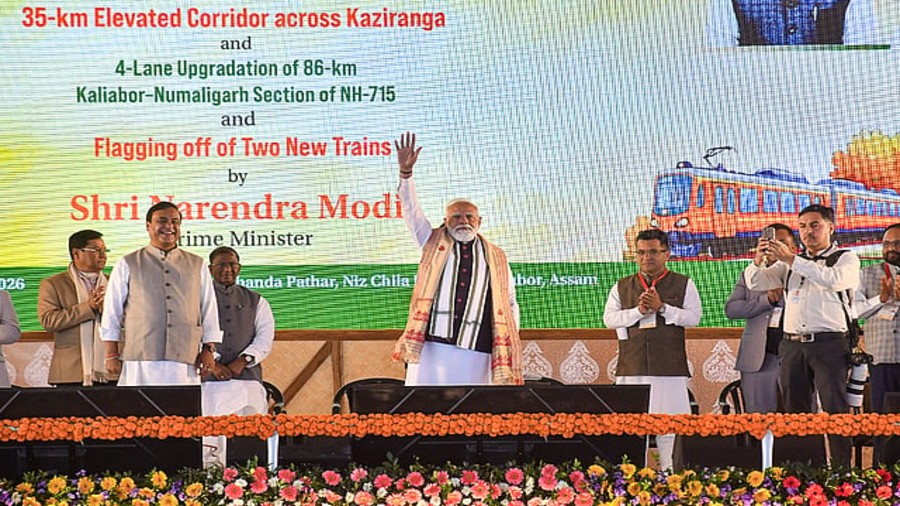
Prime Minister Narendra Modi, on January 18, 2026, inaugurated and laid the foundation for a series of major infrastructure projects in West Bengal, worth over ₹830 crore. These initiatives aim to boost multimodal connectivity across rail, inland waterways and cargo logistics. Besides, announced projects seek add new long-distance passenger train services for the region.
Addressing a gathering in Singur, Hooghly district, the Prime Minister said these developments align with the government’s vision to strengthen infrastructure in Eastern India. He underscores that the developments further accelerate economic activity, job creation and regional connectivity.
Major Projects and Their Immediate Impact
The flagship announcements include:
- Railway Infrastructure Projects (₹280 crore): Enhancing passenger and freight movement through modern systems.
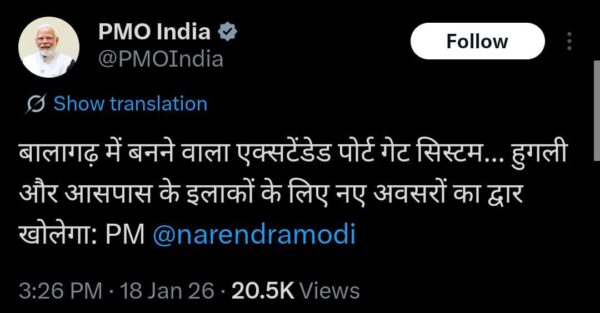
- Extended Port Gate System at Balagarh: Spanning approximately 900 acres, this multi-modal cargo hub connects road, rail, and inland waterways. It is expected to handle about 2.7 million tonnes per annum (MTPA) of cargo, easing pressures on traditional logistics corridors around Kolkata.
- Inland Water Transport Terminal: Integrated with National Waterway-1 (Ganga–Bhagirathi–Hooghly). This facility will streamline cargo movement away from crowded urban routes.
- Hybrid Electric Catamaran Launch: A 50-passenger hybrid catamaran has been introduced for greener and more efficient inland water travel on the Hooghly River. Taking a step toward sustainable transport solutions.
- New Rail Line and Local Connectivity: The Jayrambati–Barogopinathpur–Maynapur rail section (15 km), part of the larger Tarakeswar–Bishnupur route. It was opened, along with a new passenger service connecting Maynapur and Jayrambati.
Union Minister of Ports, Shipping and Waterways, Sarbananda Sonowal, described the inland waterways push as a transformation. He underscores the transformation from traditionally under-utilised logistics routes into efficient corridors. It will help reduce overall transport costs and support regional growth.
Strengthening Rail Connectivity with New Services
One of the key highlights of the event was the flagging off of three new Amrit Bharat Express trains. The design of these trains is specifically to improve long-distance connectivity for passengers across regions. These services are:
- Santragachi–Tambaram Amrit Bharat Express: Linking Kolkata’s Santragachi with Tambaram in Tamil Nadu, improving southern connectivity.
- Howrah–Anand Vihar Terminal Amrit Bharat Express: Providing a direct link between Howrah and Delhi’s Anand Vihar Terminal, catering to passengers travelling between the east and the national capital.
- Sealdah–Banaras Amrit Bharat Express: Enhancing access from Sealdah (Kolkata) to Banaras (Varanasi), a key cultural and religious corridor.
These trains are fitted with modern amenities and facilities designed for passenger comfort over long distances. They also expand the national rail network’s reach, offering new options for daily travellers, students and professionals.
Vande Bharat Sleeper and Broader Rail Push
The inauguration follows the launch of India’s first Vande Bharat Sleeper Train, which wasflagged off the day before from Malda Town Railway Station. This sleeper service connects Howrah (West Bengal) with Guwahati (Assam), significantly enhancing eastern India’s rail connectivity, especially for long overnight journeys across states.
The Vande Bharat Sleeper train features modern safety systems and enhanced passenger comfort, reflecting the ongoing modernisation of Indian Railways. It reflects a broader strategy to provide faster, safer and more comfortable travel options for citizens.
Significance of the Projects
These combined developments underscore a focused government push to knit West Bengal more closely into national transport networks. Improved rail and waterways infrastructure is to support economic growth. Particularly, growth in terms of logistics efficiency and access to markets.
Officials say that the inland waterways and extended port facilities will divert a significant portion of cargo movement from congested land routes. This modal shift can help reduce logistics costs, pollution and transit delays, making trade more seamless.
To integrate new passenger services with freight infrastructure and waterway enhancements. The initiatives aim to improve the movement of people and goods across the eastern region and beyond.
These projects aim to strengthen West Bengal’s role as a logistics hub while expanding transport options for millions of citizens, contributing both to regional development and national connectivity goals.
Stay tuned to The World Times for more such news articles!