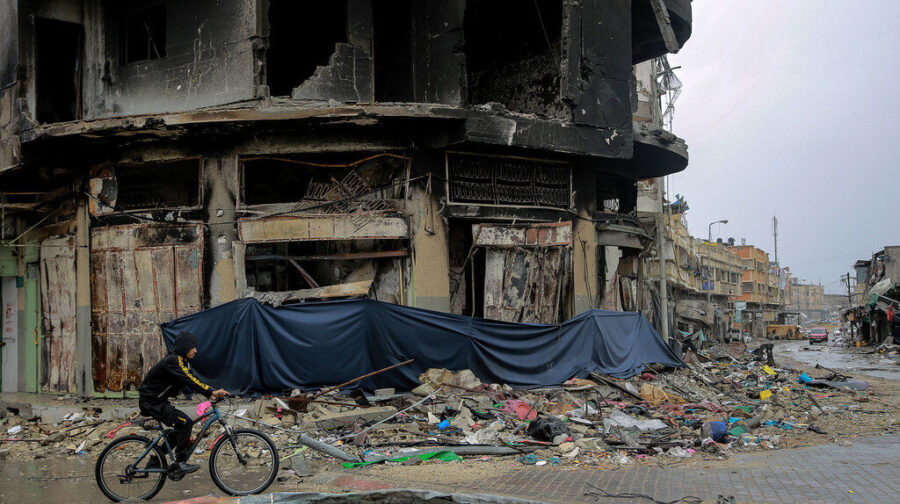
A deepening fuel shortage has plunged Gaza’s healthcare system into crisis, forcing a major hospital to suspend most services as generators ran dry.
Generators Fall Silent
A major hospital in Gaza said on Friday, December 26, 2025, that acute fuel shortages have forced it to suspend several medical services, deepening the humanitarian crisis in the war-ravaged territory.
Al-Awda Hospital, located in the Nuseirat district of central Gaza, treats around 60 in-patients and receives nearly 1,000 people daily. Hospital officials said the facility normally requires between 1,000 and 1,200 liters of diesel each day. Currently, it has only about 800 liters available, severely limiting its operations.
Critical Care Severely Reduced
Ahmed Mehanna, a senior official involved in managing the facility, said the hospital has temporarily suspended most services because it lacks the fuel needed to run its generators. Only critical units, including the emergency department, maternity ward, and pediatrics, remain operational. Mehanna added that the hospital has been forced to rent a small generator to keep these essential services running, according to Times of Israel.
Gaza’s healthcare system has largely collapsed by late December 2025, with only a limited number of hospitals still partially operating amid widespread destruction, fuel shortages, and continuing hostilities. Most surgical units and intensive care departments are no longer functioning, leaving patients with few treatment options.
Health Workers Issue Urgent Warnings
Dr. Majd Awadallah, medical director of PFBS, said hospitals face severe shortages of space, facilities, staff, medicines, and medical supplies, and stressed that authorities cannot resolve the crisis without reopening border crossings and allowing the unrestricted entry of essential materials, particularly medicines.
According to Gaza’s Health Ministry, only about half of the territory’s hospitals remain partially functional, with no facility fully operational after two years of sustained attacks. The ministry said shortages of essential medicines now exceed 56 percent, while medical supply shortages have risen above 65 percent.
Fuel and Supplies in Short Supply
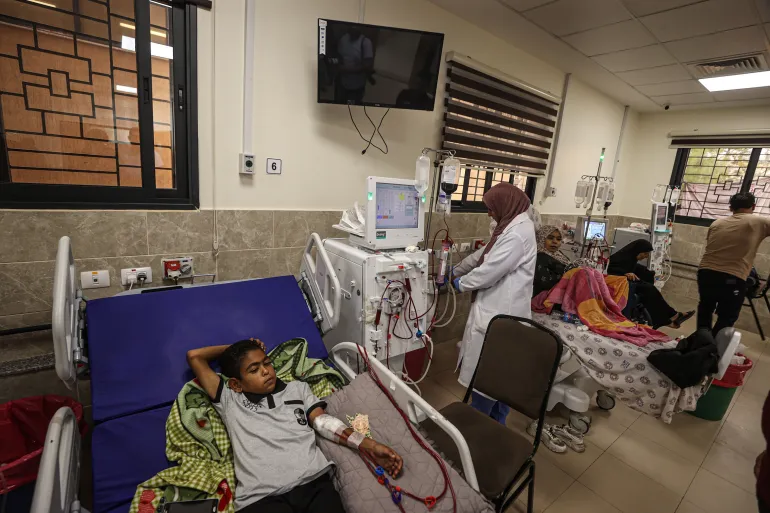
Ongoing fighting, repeated attacks on healthcare facilities and aid workers, and pervasive insecurity are severely constraining aid operations in Gaza. Humanitarian agencies say frequent movement restrictions imposed by Israeli forces—including checkpoint delays, convoy denials, and travel bans—have disrupted coordinated relief efforts.
Widespread damage to roads and other infrastructure has made transport increasingly hazardous, while acute fuel shortages have crippled hospital generators and limited the movement of ambulances and aid vehicles. Relief groups also cite mounting logistical challenges caused by mass displacement, unexploded ordnance, poor communications, and a breakdown in law and order. At the same time, continued border closures and tightly controlled entry points have sharply restricted the flow of humanitarian assistance into the territory.
A Humanitarian Emergency Deepens
The fuel crisis has pushed Gaza’s fragile healthcare system closer to collapse. Doctors warn that without urgent fuel deliveries, hospitals could soon shut down more critical services. The situation highlights the growing humanitarian toll of prolonged shortages.
For more such informative articles stay tuned at The World Times.