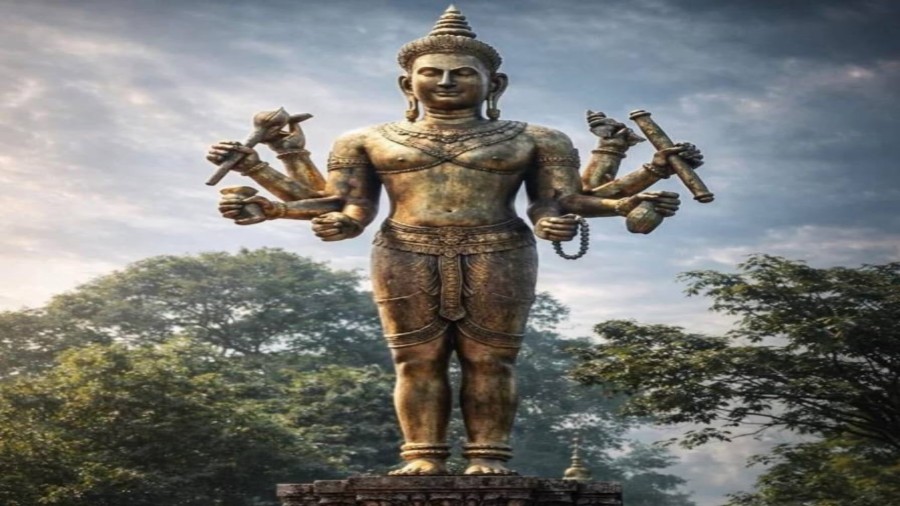
The growing tensions between Thailand and Cambodia resulted in the demolition of a statue of Lord Vishnu on December 22, 2025, in Cambodia’s Preah Vihear province. Videos of the incident circulated rapidly online after people recorded it.”It has drawn sharp international condemnation, particularly from India, while Thailand insists the action was purely security-related. This clash highlights the fragile interplay between geopolitics and cultural heritage in Southeast Asia.
The Clashes Unfold
The demolition occurred amid renewed hostilities over the disputed Chong An Ma near the An Ses checkpoint. It is roughly 100 meters inside the Cambodian territory. Erected in 2014 as a symbol of local Hindu-Buddhist devotion, the multi-meter-tall statue depicted Vishnu in a reclining pose. The statue was an embodiment of preservation and cosmic balance. Eyewitness footage shows the presence of Thai military engineers using a backhoe loader to topple and dismantle it in minutes, reducing the concrete figure to rubble. This was followed by artillery firing, which has killed at least 44 people since July. The incident and resultant disturbance displaced thousands and violated a US-brokered ceasefire.
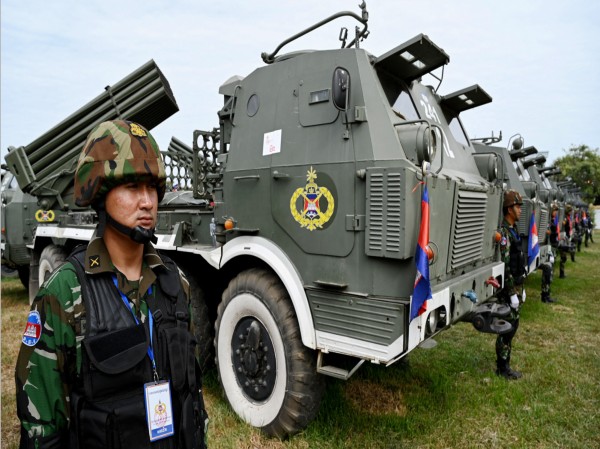
Provincial authorities of Cambodia confirmed the site’s location within their borders, accusing Thailand of a “barbaric” incursion that violates sovereignty and the 1972 UNESCO Convention on cultural protection. Phnom Penh has halted new border installations in response, fearing further provocations, diplomatic backlash, and potential Thai military intervention.
The Ministry of External Affairs swiftly condemned the act and stated that it “hurts the sentiments of believers worldwide” and urged a dialogue to safeguard shared Indian heritage. Hindu communities online expressed outrage, with hashtags like #ProtectHinduHeritage trending and calls for boycotts in tourism in Thailand.
Thailand’s Border Press Centre countered the claim and accused Cambodian troops of installing the statue on disputed land, labelling it a ‘provocative marker’ and rejecting its status as a formal religious site.”The action was security-driven to manage the area, with full respect for Hinduism’s regional ties,” officials clarified, expressing regret for any offense. A Bangkok Post op-ed criticised domestic media for mocking the incident, advocating sensitivity toward sacred faiths.
Echoes of History and the Path to Peace
All these stem from the colonial-era maps and the 1962 ICJ ruling awarding Preah Vihear Temple to Cambodia; these disputes blend nationalism with the ancient Khmer influences from the Hindu-Hindu-Hindu-Buddhist Angkor era. Vishnu shrines dot both nations, underscoring cultural overlap now weaponised in conflict.
As delegations meet under ASEAN mediation, experts call for joint heritage safeguards to prevent irreplaceable losses. The statue’s fall is more than just rubble; it symbolises how borders can fracture sacred bonds, yet it can also be a chance for reconciliation through dialogue.
For more such updates, follow us on The World Times News