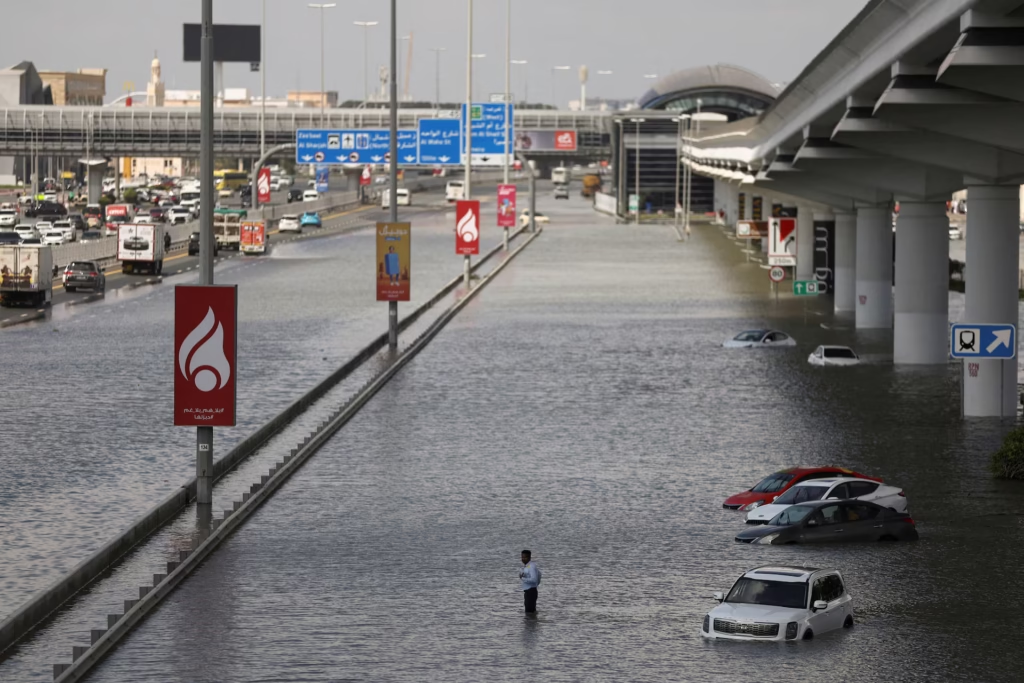
UAE floods have once again drawn attention as the United Arab Emirates (UAE), one of the so-called desert nations, has experienced unusually heavy rainfall, leading to security warnings, flight delays and cancellations, and flooding of streets and roads.
Moreover, the incident revived memories of April 2024, when intense downpours led to widespread flooding and cancellations of more than 2,000 flights at Dubai’s major international air hub. As deserts flood and skies defy expectations, one question demands our attention: is the planet pushing back against human actions, and are we prepared for what comes next?
Background and the Event (UAE Floods)
On Friday morning (19 December 2025), parts of the UAE suffered from heavy rainfall and thunderstorms, especially in Dubai and Abu Dhabi. Roads were flooded, which consequently disrupted mobility and caused flight delays.
Simultaneously, Qatar, especially Doha, has also witnessed thunderstorms and heavy rains. Extreme weather events have led to the cancellation of the Arab Cup football third-place play-off between Saudi Arabia and the UAE.
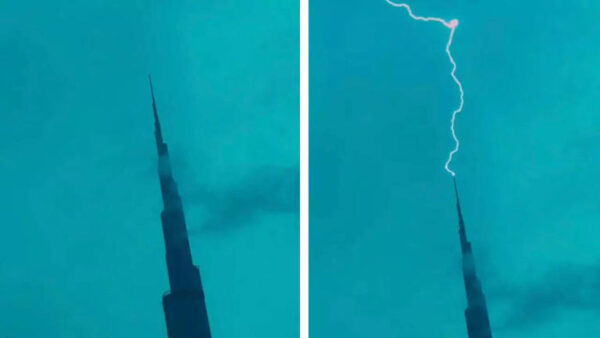
Additionally, people have been seen wading barefoot on the streets. Furthermore, video footage has shown a man riding a bicycle with its wheels fully submerged in water. Dubai Crown Prince has shared a video in which lightning strikes the top of the world’s tallest building, Burj Khalifa. Meanwhile, reports say that a 27-year-old Indian expat died after a wall collapsed during heavy rains. Therefore, the police have advised citizens to stay indoors unless “absolutely necessary”.
Why are floods unusual in the Gulf Region?
Climate
The Arabian Peninsula has a hot desert climate with very low average rainfall. Rainfall, when it occurs, is usually brief and light.
The Desert-Flood Paradox
Desert soils are hard and impermeable, which reduces their water absorption capacity. As a result, this increases the vulnerability of the region to flash floods and rapid runoffs. Moreover, urban concrete structures worsen the problem of flooding. Because of this, even limited rainfall can cause heavy floods.
What Are the Reasons Behind the UAE Floods?
Immediate Meteorological Causes
A low-pressure system formed over the Gulf region, pulling moist air from surrounding warm seas over the land. Subsequently, the warm air rose rapidly, contributing to thunderstorms, lightning, and intense short-period rainfall.
Climate Change Altering Weather Patterns
Primarily, climate is the major reason for these extreme weather events. Rare storms are occurring more often. In addition, longer dry spells and sudden, intense rainfall episodes are leading to a flood-drought cycle, particularly dangerous for arid regions.
Global Warming
Because of increasing temperatures, sudden, intense rainfalls are becoming more frequent. The heating of the atmosphere allows it to hold more moisture. However, when the atmosphere releases this moisture, it takes the form of intense, heavy rainfall rather than a light, steady rain.
Infrastructure Failure
The infrastructure of the Gulf region is designed to counter the hot, arid climate. Specifically, they create their systems for rare rainfall, not cloudbursts. Consequently, this heat-resilient infrastructure could not bear the sudden, high-intensity rain, which has caused heavy flooding, including in the streets of Sharjah’s airport.
What’s Ahead?
The Middle East is one of the most affected regions, experiencing extreme heatwaves, erratic rainfall, and water scarcity. Moreover, it is among the fastest-warming regions globally. Thus, as extreme weather events grow more frequent and unpredictable, incidents like the recent flooding in the UAE may no longer remain rare anomalies but part of a broader global pattern shaped by a warming climate.
For more such informative articles, stay tuned at The World Times.