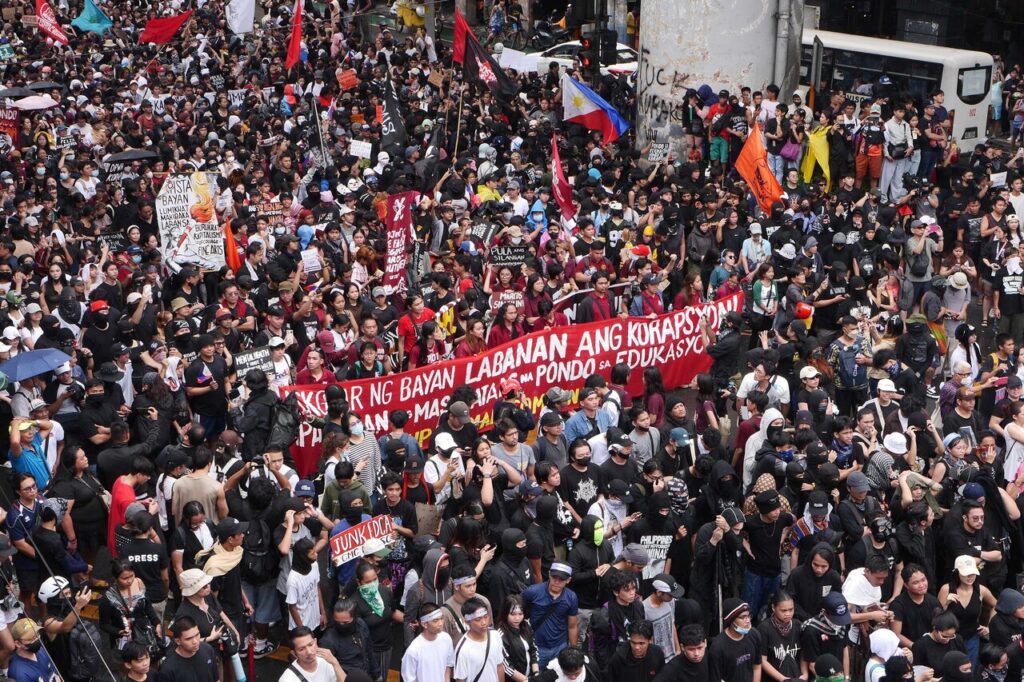
A wave of anger swept through Philippine cities as thousands of protesters took to the streets, demanding accountability for alleged corruption in multi-billion-peso flood control projects.
Big Budgets, Bigger Questions
The Philippine government has implemented numerous flood-control projects. Still, these have been overshadowed by a major, ongoing corruption scandal involving allegations of widespread delays, the use of substandard materials, overspending, and “ghost” projects. The Commission on Audit (COA) and an independent commission have found significant irregularities. These irregularities have led to ongoing Senate investigations, public outrage, and criminal charges against government officials and contractors.
From July 2022 to May 2025, the government funded approximately 9,855 flood-control projects worth over ₱545 billion. In 2024 alone, 54 projects were completed in the Soccsksargen region, with thousands more implemented nationwide.
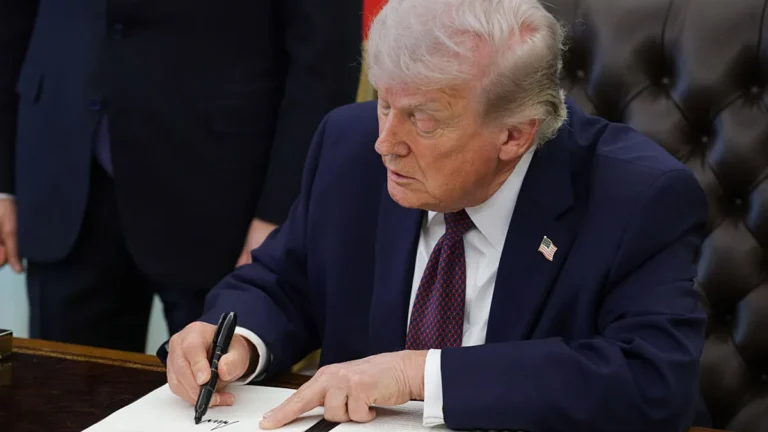
The projects aim to protect vulnerable communities near major river basins, including the Pasig-Marikina River Channel Improvement Project in Metro Manila. President Ferdinand Marcos Jr. has emphasized the importance of these projects for public safety. He has directed an inventory and audit of all flood-control infrastructure, vowing to hold accountable those responsible for anomalies.
Kickbacks, Overpricing, and Crumbling Defenses
Widespread criticism and public anger have erupted following revelations of systemic corruption and project mismanagement.
- “Ghost” Projects: Audits have uncovered numerous non-existent projects. These were fully funded and marked as completed, such as those along the Angat River in Bulacan.
- Substandard Work and Materials: Investigators found that officials often constructed projects with inadequate materials, causing them to fail in providing effective flood protection. The President himself inspected sites and expressed dissatisfaction with unfinished or poorly done work.
- Delays and Non-implementation: The COA’s 2023 report flagged the inefficient implementation of 3,047 locally funded projects worth billions of pesos due to a lack of proper planning and monitoring.
- Overspending/Fund Misuse: Allegations point to inflated project costs, “kickbacks,” and the diversion of funds into private pockets, with billions of pesos potentially siphoned off.
Streets Fill as Citizens Say ‘Enough’
Tens of thousands of people have marched in the Philippine capital, Manila, demanding President Ferdinand Marcos Jr’s resignation over a corruption scandal linked to government spending on flood-control infrastructure.
The rally, organized by the Kilusang Bayan Kontra-Kurakot or the People’s Movement Against Corruption (KBKK), began at the Luneta National Park in Manila on Sunday, with protesters marching on to the presidential palace.
The demonstrations are a response to public anger over the “Trillion-Peso” scandal, a large-scale corruption scheme involving billions of pesos in funds for flood-control infrastructure that were allegedly pocketed by officials or used for non-existent projects.
Protesters carried signs reading “Marcos Resign” and “All corrupt politicians must be held accountable,” demanding the prosecution of those involved.
Officials Scramble to Contain the Backlash
In response to a major corruption scandal, the Department of Public Works and Highways (DPWH) has promised an internal review. At the same time, the President of the Philippines announced the formation of an independent commission to investigate and file criminal charges. Although officials have not directly denied wrongdoing. The DPWH repeatedly issues public warnings against solicitation, and government leaders call for accountability as protesters demand action and express growing anger.
The DPWH issued Department Order No. 190, series of 2025, which establishes an Internal Investigation Committee (IIC) to look into the issues and recommend action.
President Ferdinand Marcos Jr. announced the formation of an independent commission to investigate the alleged corruption and file criminal charges. The DPWH repeatedly issues public warnings against solicitation related to public works projects. A former DPWH chief revealed that investigators discovered 15 “missing” projects during a probe into infrastructure completed under the Marcos administration from July 2022 to May 2025.
When Corruption Costs More Than Money
The Department of Finance estimates that corruption in flood control projects between 2023 and 2025 may have drained ₱118.5 billion (about US$2 billion). Other analysts warn that losses could be far greater. While some argue that officials diverted or misused up to 70% of the funds allocated for climate-tagged projects.
The primary economic impact stems from the failure of substandard, defective, or nonexistent flood-control infrastructure. This results in more severe damage, loss of life, and extreme weather events during natural disasters, common in the Philippines.
The scandal and ensuing investigations have led to a slowdown in public infrastructure spending. This is leading to the Philippines’ weakest economic growth in four years during the third quarter of 2025.
The corruption scandal has shaken investor confidence, particularly among those with environmental, social, and governance (ESG) mandates. Some global asset managers are now scrutinizing Philippine debt and future sales. They are demanding greater transparency to prevent inadvertent financing of graft.
Authorities have frozen approximately ₱12 billion (over $200 million) worth of assets belonging to suspects in the corruption scandal.
Social Impact

The revelations have sparked massive, nationwide anti-corruption protests, including the “Trillion Peso March” and “Baha sa Luneta” demonstrations in September and November 2025. Protesters include students, religious groups, civil society organizations, and various community members demanding accountability.
The scandal has triggered significant political turmoil, leading to the resignations of high-ranking officials, including the Senate President and House Speaker. Some groups have issued isolated calls for the military to withdraw support from the current administration. However, military leaders have firmly rejected these appeals.
While most protests remained peaceful, isolated riots in Manila caused injuries to police and protesters and damaged property. That led to multiple arrests and resulted in at least two deaths, one from a stabbing and another from a stray bullet. Human rights groups have alleged police brutality and torture of detainees during the crackdown.
The scandal has exacerbated public mistrust in government institutions and officials. Citizens express frustration because they see the elite acting with impunity. They believe the government is failing to address systemic corruption and climate change effectively. The failure to build essential flood mitigation projects has left millions vulnerable. The already struggling communities are more exposed to the increasing risks of climate change-related flooding.
Filipinos are rising in anger as floodwaters surge, refusing this time to let corruption sweep them aside. For many, the protests are more than a reaction; they’re a warning that unless leaders rebuild trust, the nation’s defenses will keep collapsing, one storm at a time.
For more such informative articles, stay tuned to The World Times.