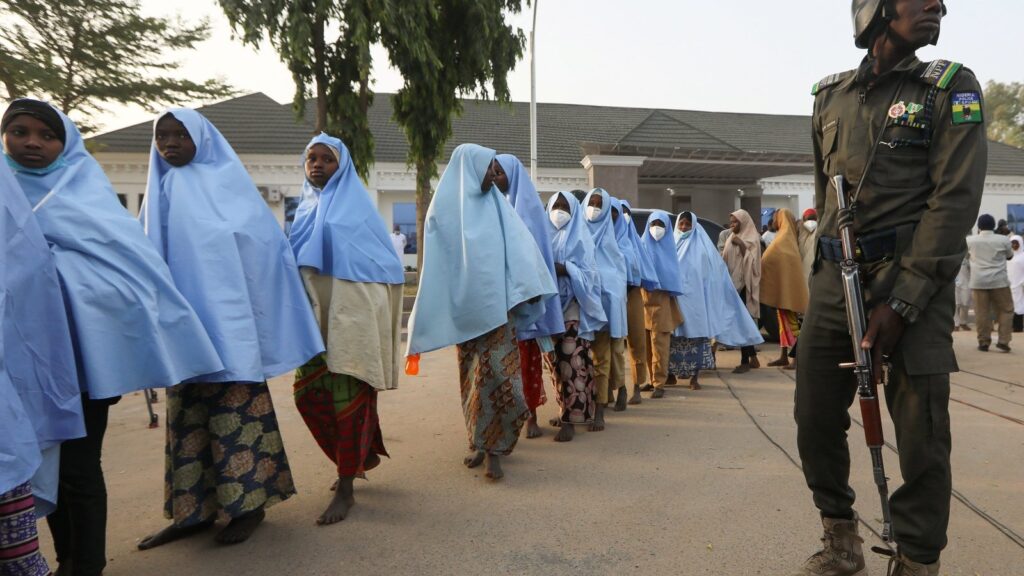
Fear is rippling across northern Nigeria after hundreds of people were abducted in a fresh wave of insurgent attacks, marking one of the region’s worst security escalations this year.
A Region Under Siege
The insurgency in northern Nigeria began as a response to long-standing social and economic frustrations; gradually shifted from a purely ideological extremist campaign to a multifaceted conflict driven by criminal and jihadist elements. The main actors now include Boko Haram, its splinter groups, and several armed bandit networks that operate largely for financial motives.
The conflict in northern Nigeria stems from long-standing ethnic and religious tensions, widespread poverty, political exclusion, and weak governance. Earlier unrest, including the Maitatsine riots of the 1980s, set the stage for the rise of Boko Haram, founded by Mohammed Yusuf in the early 2000s in Maiduguri.
The group remained mostly non-violent until 2009, when clashes with security forces triggered a major uprising that ended with Yusuf’s killing. Boko Haram resurfaced under Abubakar Shekau, adopting extreme tactics such as suicide bombings and the 2014 Chibok schoolgirls abduction. Between 2010 and 2015, it captured territory, declared an Islamic state, and pledged allegiance to ISIL, becoming ISWAP.
A major regional military campaign in 2015 forced the insurgents into remote areas, leading to internal divisions. By 2016, Boko Haram had split into Shekau’s faction and ISWAP; which pursued more targeted attacks and sought to avoid indiscriminate killings of Muslims.
The Latest Abductions: What Happened
Mass abductions for ransom have become widespread in northern Nigeria, with armed groups frequently attacking schools and rural settlements and overpowering local security personnel.
In a separate event on Tuesday, gunmen kidnapped 10 women and children from a village in western Kwara State. In the largest mass abduction in recent memory, attackers raided a Catholic school on Friday in north-central Niger State and abducted more than 300 students and staff. Fifty students escaped over the weekend. Some of the children abducted are nursery-school age.
Police said the Monday (November 24, 2025) night raid in the western state of Kwara targeted the village of Isapa, which neighbors another village where at least 35 people were kidnapped a week before.
Nigeria’s first high-profile mas kidnapping was that of the Chibok schoolgirls in 2014, when Islamist group Boko Haram forced 276 girls from their dormitories in the country’s northeast.
More than a decade later, about 90 of those girls are still missing.
Drivers of Rising Attacks: Why Violence Is Spreading
Widespread poverty, high youth unemployment, and deep economic inequality fuel much of Nigeria’s violence, as many young people turn to armed groups for income or a sense of belonging. Weak governance, corruption, and limited access to justice have created ungoverned areas where militants and criminal gangs operate freely, often without consequences.
Climate change and competition over scarce resources—especially between herders and farmers—have intensified communal clashes. Ethnic and religious divisions, often exploited by political actors, deepen mistrust and trigger cycles of retaliation. Meanwhile, porous borders and instability in the Sahel enable the flow of illegal weapons and allow extremist groups like Boko Haram and ISWAP to expand their operations.
A complex mix of socio-economic, political, and environmental factors drives Nigeria’s insecurity, demanding coordinated, long-term solutions.
Regional and International Concerns

Mass abductions in Nigeria have drawn significant regional and international concern, primarily due to the humanitarian crisis they create, the threat they pose to regional stability, and their violation of fundamental human rights, particularly the right to education. International bodies like the UN Human Rights Office (OHCHR) have strongly condemned the abductions; urging Nigerian authorities to take all lawful measures to halt the attacks, ensure the safe return of victims, and hold perpetrators accountable. The UN Deputy Secretary-General emphasized that schools should be “sanctuaries not targets”.
The insurgents have snatched more students from the Catholic school in central Nigeria than the 276 girls they abducted during the infamous 2014 Chibok incident, marking the latest in a series of mass kidnappings—including the abduction of 25 pupils from a school in Kebbi state earlier this week.
No group has yet claimed responsibility and authorities have deployed security forces to try and locate the students and their captors. Niger state has reportedly closed all schools until further notice, says the UN.
UN Deputy Secretary-General Amina Mohammed – a former environment minister in Nigeria – said in a social media post that schools should be “sanctuaries for education, not targets…We must protect schools and hold perpetrators accountable.”
As mass abductions escalate and whole communities live in fear, Nigeria faces a critical moment—one that demands swift action before the crisis spirals even further out of control.
For more such informative articles stay tuned at The World Times.