A deadly car blast near Delhi’s Red Fort on 10 November 2025 shocked the capital and triggered a massive security investigation. The explosion occurred at a busy traffic signal close to Gate No. 1 of the Lal Qila Metro Station, only a short distance from the historic monument. The blast killed at least eight people and injured many others.
What Happened?
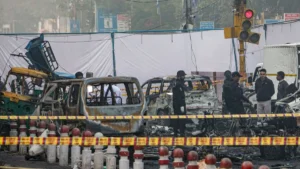
Investigators soon identified the man driving the explosive-laden Hyundai i20 as Dr. Umar Un Nabi, a medical college professor originally from Pulwama in Kashmir and working in Faridabad. His body was severely damaged in the explosion, so forensic teams used DNA samples to confirm his identity.
Dr. Umar had purchased the car on 29 October, and investigators say he kept it parked at Al-Falah Medical College for more than a week before driving it into Delhi on the day of the attack. Sources say he “panicked” after police began arresting people in his circle, which may have triggered a rushed decision to carry out the attack.
The NIA later arrested Amir Rashid Ali, a resident of Pampore in Kashmir, accusing him of helping the doctor plan the bombing. The vehicle used for the attack was registered in Amir’s name, and investigators believe he played a key role in acquiring and preparing the car for use as an improvised explosive device (IED). Several reports say Dr. Umar and Amir had been scouting the Red Fort area earlier, suggesting the location was chosen deliberately.
Explosive Stockpiles Uncovered
As the probe deepened, investigators uncovered what they described as a “white-collar terror module”. This group reportedly involved educated professionals, including doctors, with suspected links to Jaish-e-Mohammad (JeM) and Ansar Ghazwat-ul-Hind. During raids in Faridabad, security forces seized nearly 3,000 kilograms of explosives, along with detonators, timers, and other bomb-making materials. This discovery suggested that the group may have been preparing for multiple attacks, not just the one near the Red Fort.
Investigators also found live 9mm cartridges at the blast site, raising concerns that the group was armed and capable of further violence. The NIA arrested additional suspects including Dr. Muzammil Shakeel, another associate of Dr. Umar whose name repeatedly surfaced during the interrogation process. Officials suspect that the module had external handlers and may have received help or funding from outside India.
The government quickly labeled the explosion a terrorist attack, condemning it as a “senseless act of violence” carried out by “anti-national forces.” Senior officials held emergency meetings to review the security situation across Delhi. The NIA took full control of the investigation, collecting forensic evidence, examining CCTV footage, and questioning dozens of witnesses. Authorities also tightened security at major markets, metro stations, monuments, and government buildings following the blast.
Security Tightened Across the Capital
As part of the investigation, the Red Fort was closed to visitors between 11-13 november and reopened only after security agencies completed their initial assessments. Nearby areas, including Chandni Chowk, also shut down temporarily as a precaution. Officials said these steps were necessary to ensure public safety and allow forensic teams to work without disruption.
The investigation is still ongoing, with the NIA examining explosive fragments, chemical traces, vehicle parts, and possible communication links between the suspects and external handlers. Officials say the blast appears to be a coordinated terror operation involving planning, scouting, and the use of a suicide bomber. They are now working to identify every member connected to the module and to prevent further attacks.
Stay updated with The World Times