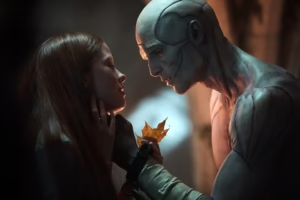
When Jacob Elordi emerged from the shadows of Guillermo del Toro’s Frankenstein, draped in white bandages like some unholy Adonis, the internet did what the internet does best: it lost its collective mind. “I’m feeling womanly things for Elordi’s monster,” confessed one user on X. Another declared him “all that.” The reactions were as thirsty as they were revelatory.
Women, it turns out, have always found monsters hot.
But here’s where things get interesting. This isn’t just about one extremely attractive Australian actor in artfully applied prosthetics. Del Toro’s choice to cast a heartthrob as the Creature, complete with sculpted cheekbones, pouty lips, and “long and fluttering” eyelashes has accidentally stumbled into one of literature’s most enduring debates.
The Frankenstein “Monster” Mary Shelley Actually Wrote
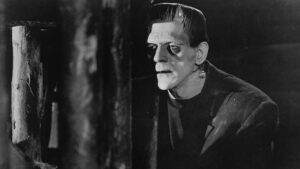
Let’s get one thing straight. Mary Shelley’s original Creature is supposed to be beautiful. Victor Frankenstein explicitly notes that he “selected his features as beautiful” with lustrous black hair and pearly white teeth. The horror wasn’t in ugliness by design, but in the uncanny wrongness of reanimated dead flesh in motion. Once brought to life, Victor’s creation became “a thing such as even Dante could not have conceived.”
Del Toro’s version takes this ambiguity and runs with it.
Elordi’s Creature possesses overlapping panels of skin, smoothly sutured, with skin that changes color throughout the film. His skin is sometimes alabaster, sometimes greenish like a fish, sometimes a little bit blue, like a corpse pulled from a river. The famous bolts are gone. The flat skull is history. What remains is something that straddles the line between beautiful and unsettling—which, one can argue, might be closer to Shelley’s original intent than Boris Karloff’s iconic 1931 portrayal ever was.
“Hollywood, because it likes an ugly villain, has gone out of its way to make the creature uglier and uglier and uglier over time,” says Eleanor Johnson, Columbia professor and author of Scream with Me: Horror Films and the Rise of American Feminism. Del Toro, intentionally or not, strips away nearly a century of that expectation. His monster isn’t visibly monstrous and that’s precisely what makes him powerful.
The Grotesque was in Victor
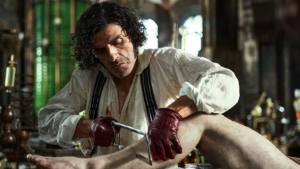
Here’s where Mary Shelley’s ghost starts laughing from beyond the grave. Many critics dismiss Frankenstein as un-feminist because it lacks strong female characters. Elizabeth is passive. Justine is doomed. The mother figures are all dead. Even the female monster never comes to exist. Victor destroys her before she can draw breath, terrified she might have autonomy and reject his creation.
As scholar Anne Mellor argues, Frankenstein is a feminist novel precisely because of these absences. The feminist politics exist in the critique of Frankenstein’s decision to create a masculine mode of reproduction. He creates life without women, and the result is catastrophic.
When Victor Frankenstein dares to subvert the laws of nature, using science alone to harness the powers of life, he omits the mother entirely. And in doing so, what is supposed to be natural and beautiful becomes unnatural and grotesque. The child of this male-only creation is too frightful even for the father to love until Elizabeth embraces it, offering the maternal compassion Victor cannot.
Mary Shelley, daughter of pioneering feminist Mary Wollstonecraft, was writing during an era that demanded women stay silent, decorative, and domestic. Through Victor, she critiques a patriarchal fantasy: that men can create life without women. The real monster isn’t the stitched-together corpse. It’s the man who tries to erase the feminine from creation itself.
Frankenstein Reignites The Hot Monster Problem
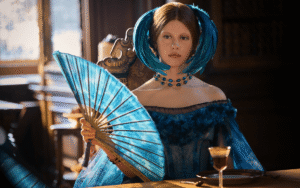
In del Toro’s film, Mia Goth plays both Victor’s mother and Elizabeth, the woman he covets. The doubling is a visual manifestation of Victor’s Oedipal issues and his inability to see women as anything but objects of his desire or sources of maternal comfort.
The original text is even more explicit. Victor’s termination of the female creature represents not just the fear of female autonomy, but the patriarchal desire to validate men’s superiority over women. He destroys her because he imagines she might have desires of her own, might “turn with disgust from him to the superior beauty of man.”
So when we make Frankenstein’s so-called Monster hot, are we perpetuating the same beauty standards that killed the female monster before she could even exist? Or are we daring to suggest that beauty, desire, and monstrosity can coexist—a freedom women are still refused?
Beauty at the Edge of the Grave
Whether you view del Toro’s Creature as hot or as accurate to Mary Shelley’s vision, it shouldn’t overlook Jacob Elordi’s performance. Elordi makes a character we’ve seen so often before feel new again. He doesn’t speak for the first act, communicating entirely through movement and expression. When he does find language, it’s with the halting wonder of someone discovering that words can name the loneliness he’s felt since his first breath.
In our current age, when AI threatens to replace human creativity, when tech bros fantasize about transcending biological limitations, when the question “what makes us human?” feels more urgent than ever, del Toro’s Frankenstein arrives with eerie timeliness. The story is, perhaps even more relevant than ever before, with Victor portrayed as the true monster, as he always should be.
The Creature is a reminder that the most dangerous monsters often don’t look monstrous at all. They look like respected scientists. Like husbands who won’t listen and societies that force women to choose between being decorative or being destroyed.
Elordi’s monster embodies that paradox. He’s beautiful, yes, but beautifully wrong. Tender and terrifying in equal measure. And maybe that’s what makes him irresistible. Because Mary Shelley already knew what the internet is just discovering: the monster was beautiful, actually. And that was always the point.
Read more on Literature, Cinema and Pop Culture on The World Times.