The upcoming Bihar Assembly Elections 2025 are shaping up to be one of India’s most closely watched political events of the year. With 243 seats in contention, the election is seen as a test of both the ruling National Democratic Alliance (NDA) led by Chief Minister Nitish Kumar and Prime Minister Narendra Modi, as well as the opposition INDIA Bloc, spearheaded by Tejashwi Yadav’s Rashtriya Janata Dal (RJD) and the Congress. Bihar, with its complex political history and strong grassroots mobilization, remains a state where voter sentiment can shift quickly and alliances often reshape the outcome.
Main Contenders and Alliances
The NDA, which includes the Janata Dal (United) and the Bharatiya Janata Party (BJP), is emphasizing its development record, citing improvements in infrastructure, education, and rural electrification. On the other hand, the opposition alliance is focusing its campaign on unemployment, migration, and inflation, issues that continue to affect everyday life in the state. Bihar’s young population, many of whom migrate to other states for jobs, represents a key voter group that could play a decisive role in the election.
One of the central topics in this election is the challenge of youth unemployment. Many voters express frustration over limited local job opportunities, despite promises of industrial growth and skill development. Migration remains high, with thousands of workers leaving Bihar each year in search of better livelihoods. The opposition has promised to create more employment within the state, while the government highlights ongoing industrial and infrastructure projects as part of its long-term plan.
Voters’ Top Concerns
Development and infrastructure also dominate the campaign discourse. The ruling alliance points to improved connectivity, better rural roads, and increased electricity coverage across districts. Meanwhile, critics argue that progress has been uneven, with rural areas still lagging behind urban centers. Issues like irrigation, flood management, and access to healthcare continue to be significant for rural voters, who make up a large portion of Bihar’s electorate.
Another factor adding to the political climate is the revision of voter lists, which has led to some controversy. Reports suggest that many migrant workers and first-time voters faced challenges during the verification process, sparking debates about electoral inclusivity and fairness. The Election Commission of India has maintained that the process is transparent and necessary to ensure accurate rolls, but opposition parties have demanded more scrutiny.
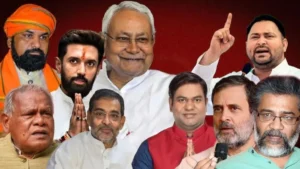
(indiatoday.in)
Observers note that Bihar’s politics are often unpredictable. Nitish Kumar’s history of shifting alliances makes it difficult to forecast outcomes purely on ideological grounds. Local loyalties, caste dynamics, and perceptions of leadership often play as much of a role as party manifestos. Analysts believe that while national narratives will influence the race, local issues like employment and development will likely drive voting behavior.
What To Watch
As the state prepares for polling, the Election Commission has ordered tighter monitoring to prevent the distribution of cash, liquor, and other inducements during the campaign period. Voter turnout will be a key indicator of enthusiasm, especially among youth and women, who have become increasingly active in Bihar’s political landscape.
In the end, the Bihar elections of 2025 will not only determine the state’s leadership but also reflect broader trends in Indian politics. The results could signal how voters weigh promises of national growth against local realities and how democracy continues to evolve in one of India’s most politically vibrant states.
Stay updated with The World Times