

I sit in a 3BHK apartment in West Mumbai, staring through glass windows at a city that refuses to be contained by a single narrative. In front of me, prim and polished buildings stretch forty floors high. More skyscrapers pierce the sky beyond them. And tucked between them, almost apologetically, are pockets of trash and tin-roofed houses eroded by the grim wash of time. On my way in, I was greeted by buildings belonging to Reliance Industries Limited. Those gleaming monuments, temples to a very specific kind of aspiration.
I’ve been to Colaba, past the homes of celebrities, and stood outside the Ambani’s residence. But I haven’t been to the slums; I’ve only looked at them.
There’s something unsettling about this view, this proximity of extremes. An introspective mood has settled over my visit to the city of dreams. I wonder if these two views are unrelated, or if one sustains the other? What if the towers exist because the slums do? What if they’re both expressions of the same economic logic?
Economics of a Free Market
It brings to mind what Paul Ekins, the British ecological economist, once observed: that transnational corporations are becoming “giant areas of bureaucratic planning in an otherwise market economy.” He saw “a fundamental similarity between giant corporations and state enterprises. Both use hierarchical command structures to allocate resources within their organisational boundaries rather than the competitive market.”
Read that again: rather than the competitive market. What Ekins understood is that at a certain scale, corporations stop participating in markets and start replacing them.
In India, this phenomenon finds its clearest expression in Reliance Industries Limited (RIL). Rather than focusing on Reliance as an anomaly, I’d like to retrospect on it as an inevitable result of structural capitalism.
The Reliance Model
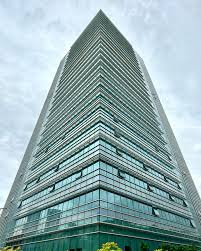
RIL is India’s largest private sector company, with a market capitalization exceeding ₹20 lakh-crore. It operates across energy, petrochemicals, telecom, retail, and media—a sprawling empire that has aggressively absorbed Future Retail, Radisys, Den Networks, Hathway Cable, and numerous others in recent years. This vertical integration across multiple sectors creates precisely the kind of self-contained planning unit Ekins described.
In telecommunications, Jio now commands over 41% market share, making it the largest player in a sector that, just a decade ago, had a dozen competitors.
Jio didn’t just compete. It restructured the entire industry by offering services at rates that forced consolidation. Smaller operators couldn’t sustain the losses, but Jio could, backed by the capital reserves of a petrochemical giant.
RIL’s acquisitions also position it to dominate the organised retail space. In FY26, its revenue grew by 18.5% to reach ₹90,554 crore in the field of retail alone. In petrochemicals and refining, RIL has long been dominant, operating one of the world’s largest refining complexes.
Reliance is not merely another competitor in the marketplace. It is vertically integrated across nearly every stage of production and distribution.
RIL owns the store you buy from, the network that powers your phone, and the polymer that wraps your groceries. Despite being a single conglomerate, it controls both upstream production and downstream retail.
In layman’s language, Reliance’s operations have reached a scale where it is less a participant in the market, and more of an organizing framework.
The Death of Competition
The language of free markets assumes a level playing field. It assumes that if you have a better product, or a smarter strategy, you can compete. But what happens when one player has such disproportionate capital that the playing field ceases to exist?
Small telecom operators didn’t fail because Jio offered better service. They failed because Jio could offer services below cost indefinitely, a strategy possible only for a conglomerate that spans oil, telecom, and retail. Reliance can integrate vertically in ways they can’t afford, leverage data from telecom to inform retail strategy, cross-subsidize across sectors, and deploy capital at scales that turn market competition into a war of attrition.
When Future Retail was struggling during the pandemic, it didn’t have options. It needed capital. And there was one entity with the capital to deploy and the strategic interest in acquiring it.
That isn’t a failure of entrepreneurship. Rather, it’s a failure of the idea of competition
In Mumbai, Reliance Towers Over the Free Market

According to market data, RIL’s dominance has produced oligopolistic conditions across multiple sectors. In each, a handful of players control most of the market, leaving little room for new entrants. The idea of “competition” persists in rhetoric, but in practice, it feels increasingly hollow.
Is Reliance the sole cause of this imbalance? Perhaps not. It is, rather, its most visible expression—the mirror through which we glimpse the deeper machinery of India’s economy.
In the gleam of its glass towers, the city’s contradictions come into focus: ambition and deprivation, growth and exclusion, the slums and the skyscrapers, both captured in the same pane of light.
Read more on economy and development at The World Times.



This post made my day. So helpful!
Couldn’t express it in a more better way 😍